June 4, 2026
The Complete Meal Prep Guide for Busy Families (That Actually Works)
A two-hour Sunday routine that turns eight ingredients into five different family dinners — without repeating the same meal twice.
By ChefDeck
· 12 min read
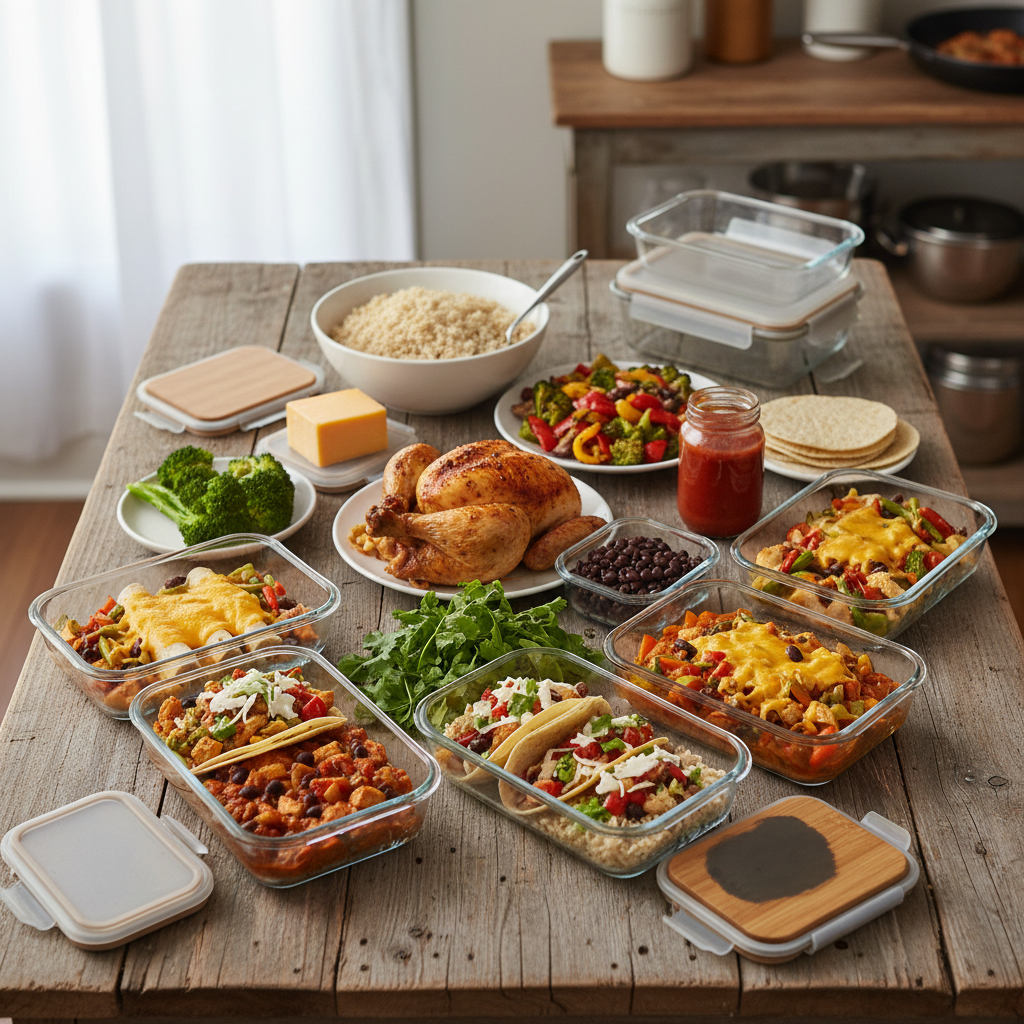
It's 5:45pm, everyone's hungry, and you have no idea what's for dinner. Sunday is the one day most of us actually have time to cook — and this routine turns that two hours into five different weeknight dinners without repeating the same meal twice.
- Why most family meal prep falls apart by week two (and the three mistakes behind it)
- A simple 2-hour Sunday framework: 3 proteins, 2 grains, 3 vegetables — five different dinners
- Exact quantities by family size so you never run short by Thursday
- A grocery list system that actually works, plus safe storage rules to carry you through Friday
It's 5:45pm and nobody knows what's for dinner
You're standing in the kitchen, still in your work clothes, and three people are asking different questions at the same time. One kid wants pasta. The other will "only eat nuggets." Your partner is scanning the fridge like something edible might materialize. Nothing is thawed. Nothing is prepped. The takeout app is already open on your phone.
This is the moment meal prep is supposed to prevent — and if you've tried it before and still ended up here, that's not a personal failure. It means the system you used didn't fit how your family actually eats. The good news: the fix is simpler than most meal prep content makes it sound. You don't need twelve matching glass containers or a laminated weekly planner. You need a repeatable two-hour Sunday routine that produces components, not complete meals, and lets weeknight assembly take five minutes instead of forty-five.
That's exactly what this post walks you through.
Why most family meal prep falls apart by week two
If you've tried meal prepping for families before and burned out fast, you're in good company. Most people hit the same three walls, and recognizing them is half the battle.
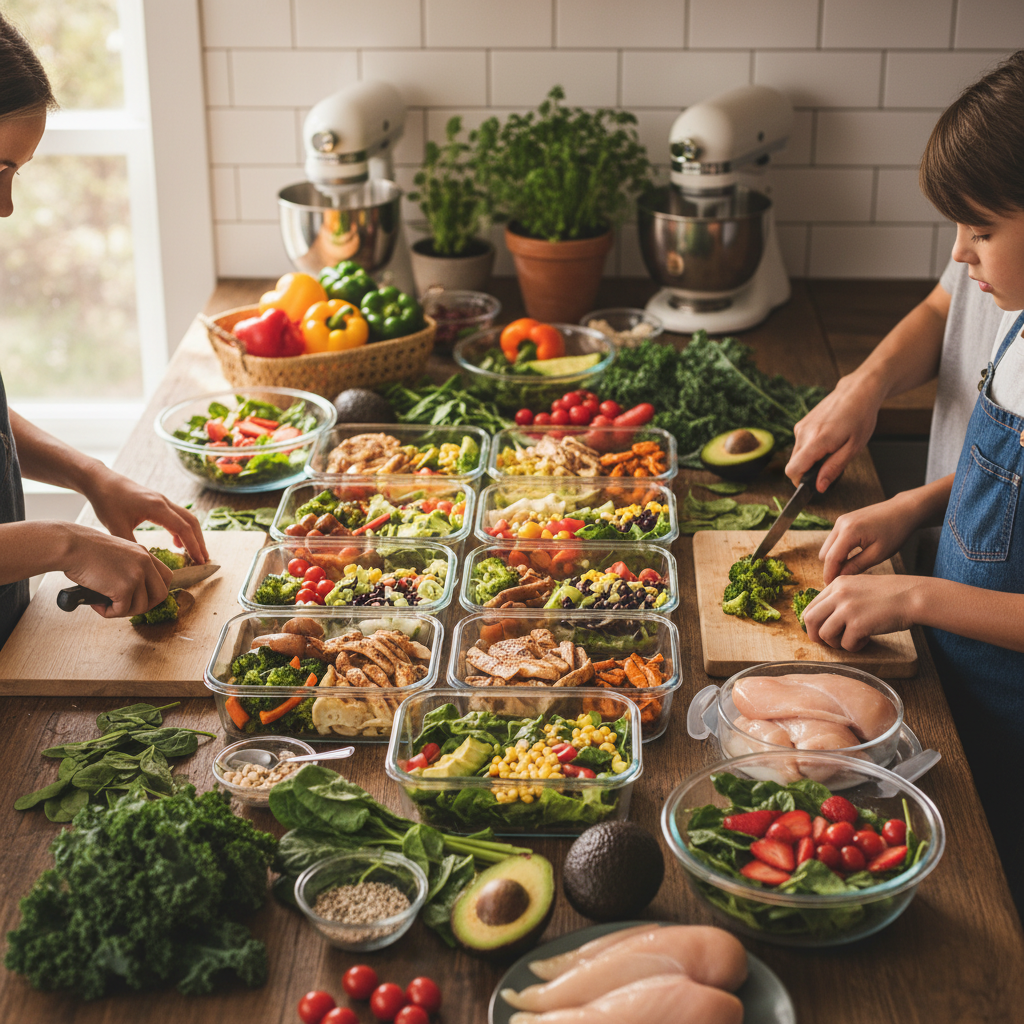
Prepping too many complete meals at once is the most common trap. You spend six hours on Sunday making five fully assembled dinners — a lasagna, a soup, a casserole — and by Wednesday you're staring at the same flavors you've been eating since Monday. It feels like a punishment, not a convenience. The fix is prepping components (a cooked protein, a grain, roasted vegetables) that combine into different meals each night rather than serving the same dish reheated. Pick one protein, one grain, and two vegetables — that combination gives you three different dinners this week, not one repetitive meal five nights in a row.
The second failure mode is prepping food your family won't actually eat. Parents batch-cook elaborate dishes that look great in a flat-lay photo and get quietly boycotted by the nine-year-old. Kid-friendly doesn't mean boring — it means familiar flavors with enough flex that everyone can build their own plate. A honey garlic sauce on chicken, for example, works for kids and adults in a way that preserved lemon gremolata typically doesn't.
The third is a container problem that nobody talks about. Prep everything into one giant container per item, and by Wednesday you're chipping out frozen rice with a fork or fishing through a huge tub of chicken to figure out how much is left. Small, single-meal portions in containers that stack flat — rectangular, 2- to 3-cup capacity — make a real difference to how reliably the prep actually gets used.
Prepping components, not complete meals, is what keeps the routine from feeling like a sentence.
Once you understand why the old approach stalled, the framework below clicks into place immediately.
The only Sunday routine you actually need (2 hours, 5 dinners)
The framework is built around a simple ratio: 3 proteins, 2 grains, 3 vegetables. That's eight components, prepped across two hours, that combine into five genuinely different dinners. Here's how the session runs.
- 0:00 — Preheat & start grains (10 min active). Get your oven to 425°F. Start a large pot of rice or farro on the stove. Grains take the longest with the least attention, so they go first.
- 0:10 — Prep and season proteins (20 min active). Season your proteins while the oven heats. Pat chicken thighs dry and season with salt, pepper, and garlic. Brown ground beef in a 12-inch skillet. Slice flank steak or prep a second beef component if you're using one.
- 0:30 — Roast vegetables (10 min active, 25 min passive). Toss your three vegetables — broccoli florets, bell peppers, and zucchini work well together — in olive oil and salt, spread them on two sheet pans, and slide them into the oven. Set a timer and walk away.
- 0:40 — Cook proteins (mostly passive). Chicken thighs go into a separate oven rack or a cast iron skillet. Ground beef is already done. A third protein like a simple smoky chili can simmer low on the stove while everything else finishes.
- 1:05 — Pull everything, let it cool (15 min). Nothing goes into a container warm. Let all components cool on the counter — this prevents condensation buildup that makes refrigerated food go soggy.
- 1:20 — Portion and store (30 min). Divide each component into family-size portions. Label containers with the contents and the date. Stack in the fridge with grains at the bottom, proteins in the middle, vegetables on top.
- 1:50 — Write your assembly map (10 min). Stick a sticky note on the fridge that matches each weeknight to its combination. You've just eliminated five "what's for dinner" conversations.
Here's what a real example week looks like using this framework:
- Monday: crispy chicken thighs + white rice + roasted broccoli. Five minutes to reheat, ten minutes to eat.
- Tuesday: Seasoned ground beef from Sunday's batch becomes skillet taco meat served in tortillas with shredded cheese and salsa — completely different dinner, same protein.
- Wednesday: Prepped chicken gets wrapped with black beans, roasted peppers, and rice in a tortilla for a black bean chicken wrap. Assembly takes under ten minutes.
- Thursday: The soy-ginger beef and broccoli with steamed rice comes together fast when the beef is already cooked and the broccoli is already roasted — just add the sauce and toss over the remaining rice.
- Friday: Whatever protein is still in the fridge gets folded into a simple smoky beef and bean chili that simmers while you help with homework. It also freezes beautifully if you made a full batch on Sunday.
Five different dinners. Same eight components. No night looks or tastes like the one before it. We made this switch about six months ago and the 5pm panic is basically gone.
What to actually prep (by family size)
One of the most practical questions in meal prep for families — and one that almost no guide answers directly — is how much food you actually need to cook. Make too little and you're back to scrambling by Thursday. Make too much and things go to waste before Friday.
Here are reliable quantities per family size for a five-dinner week:
| Component | Family of 2 | Family of 4 | Family of 6 |
|---|---|---|---|
| Protein (total, raw) | 2.5 lbs | 5 lbs | 7.5 lbs |
| Grains (dry) | 2 cups | 4 cups | 6 cups |
| Vegetables (raw) | 4 cups | 8 cups | 12 cups |
For a family of 4 specifically, that means roughly 2 lbs of chicken (bone-in thighs shrink after cooking), 1.5 lbs of ground beef, and 1.5 lbs of a third protein split across five dinners. Four cups of dry rice or farro yields about eight to ten cups cooked — enough for all five nights with some to spare for lunch the next day.
If you're scaling up and want a reference point for what a fully loaded batch-cook looks like, the high-protein meal prep burritos recipe makes 10 servings from a single session — useful for families of 4 or more who want a freezer buffer on top of the week's fresh dinners.
One practical note: weigh proteins before cooking rather than after. A pound of raw chicken becomes significantly less after roasting, and eyeballing cooked quantities is how portions run short by Wednesday.
The grocery list system that actually works
The Sunday session only works if you walk into the kitchen with everything you need. Most shopping trips go sideways because the list is built as a stream of consciousness — "chicken, also get broccoli, oh and we need soy sauce" — which means you're wandering every aisle twice and still forgetting the garlic.
The category-first method fixes this. Build your list in this exact order:
- Proteins — list every protein by name and quantity in pounds
- Grains — rice, farro, pasta, or whatever your two grains are, with cup measurements
- Vegetables — fresh and frozen, with quantities in pounds or bags
- Pantry staples — oils, sauces, spices, canned beans — anything that turns components into a finished dinner
Shop in that order through the store and you'll move from the perimeter inward, which is also how most grocery stores are laid out. You hit meat first, produce second, dry goods last. You won't double back.
If the mental load of building this list every week is part of what's kept meal prep from sticking, ChefDeck handles it automatically. Save the week's recipes to your plan, set your family size, and it generates a scaled, categorized grocery list you can check off in the store. There's a 14-day Pro trial, no card needed, if you want to see how it fits into a real week before committing.
Either way — whether you use a tool or a notes app — the habit of building the list by category before you step foot in the store is what separates a productive Sunday session from a frantic one.
Storage rules that keep Sunday's prep safe through Friday
Good prep goes to waste when storage isn't thought through. The USDA's guidelines are clear on refrigerator life for cooked foods: cooked chicken and ground beef are safe for 3 to 4 days in the fridge; cooked grains and roasted vegetables hold for 4 to 5 days. That means anything you prep on Sunday is safe through Thursday without freezing — and Friday's dinner, like a batch of chili, should either be made fresh or pulled from the freezer.
Here's a simple breakdown of what to refrigerate versus freeze:
- Refrigerate: cooked chicken, cooked ground beef (if using within 4 days), cooked rice, roasted vegetables, cooked farro
- Freeze: chili, burritos, any protein you won't reach until day 4 or 5, extra portions beyond the week
- Don't freeze: roasted vegetables (they go mushy when thawed), dressed grains, anything with a cream-based sauce
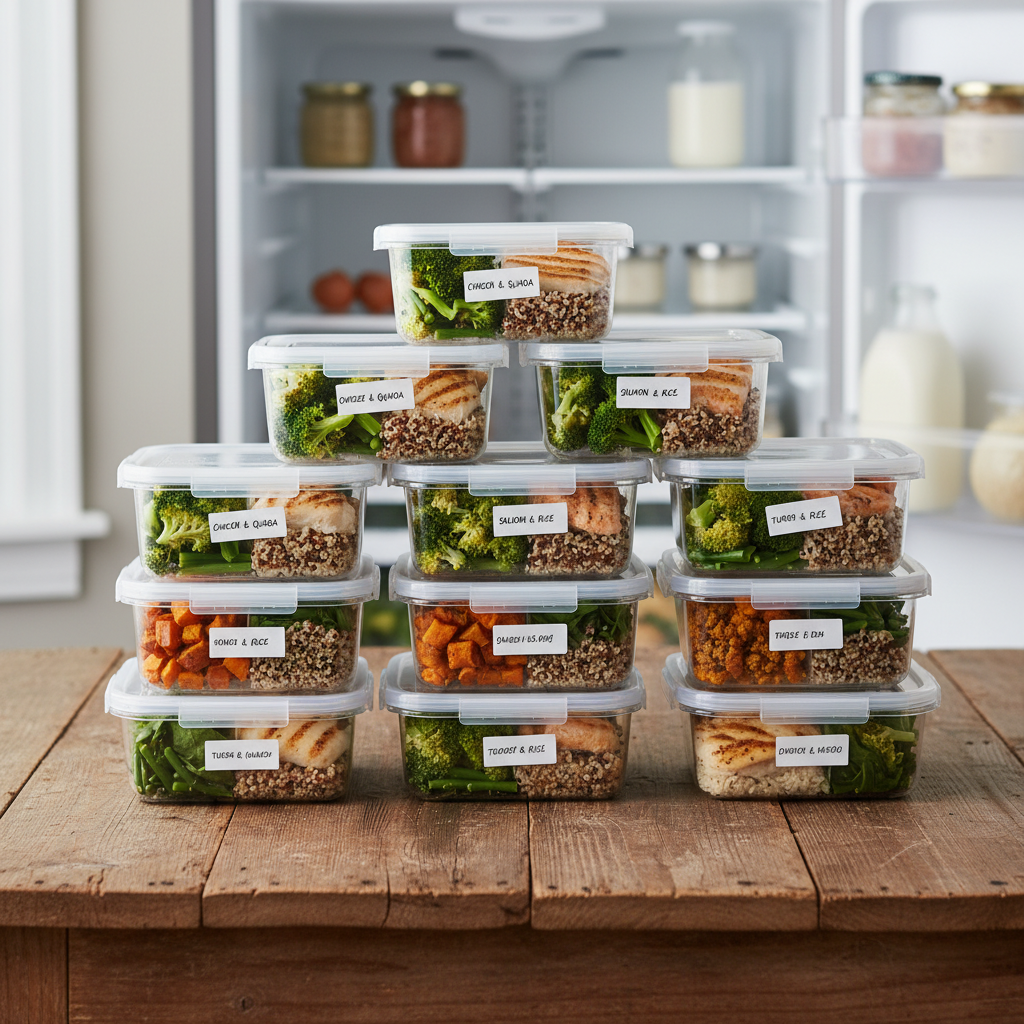
For container format, the grab-and-go reality of weeknight reheating matters. Tall round containers look tidy but microwave unevenly — food at the edges overcooks while the center stays cold. Wide, shallow, rectangular containers (about 2 to 3 cups capacity) reheat evenly in two to three minutes and stack flat in the fridge, making it easy to see what you have at a glance. Glass is worth it for proteins and grains you'll microwave; plastic works fine for vegetables you'll toss into a hot skillet.
Label everything with the contents and the prep date — not just "chicken" but "chicken thighs — Sunday 10/13." After a long Tuesday, you don't want to be guessing whether something is still good.
People also ask
Frequently asked questions
How long does meal-prepped food last in the fridge?
According to USDA food safety guidelines, most cooked proteins (chicken, ground beef) stay safe for 3 to 4 days refrigerated. Cooked grains and roasted vegetables last 4 to 5 days. Prep on Sunday and plan to eat proteins by Wednesday or Thursday — save Friday's meal for a fresh cook or something you froze.
What are the easiest foods to meal prep for a family?
Ground beef, bone-in chicken thighs, and rice are the most forgiving starting points. Ground beef cooks in under 20 minutes and flexes into tacos, bowls, and chili. Chicken thighs reheat without drying out. Rice holds its texture better than pasta. Build your first prep session around these three and you'll have a stable foundation.
How do you meal prep without eating the same thing every night?
Prep components, not complete meals. One batch of cooked chicken becomes wraps on Wednesday and a stir-fry on Thursday. One batch of ground beef becomes taco meat on Tuesday and a base for chili on Friday. The proteins and grains stay the same; the sauces, toppings, and formats make each dinner feel distinct.
Does meal prepping actually save money for families?
Yes, in two ways. Buying proteins in bulk (a 5-lb package of chicken thighs versus individual portions) typically costs less per pound. And having dinner ready to assemble on a Tuesday night means the takeout app stays closed. Even a modest reduction in weekly takeout spending — say, two fewer orders a month — covers most families' grocery overages from batch cooking.
Your first Sunday: the exact starting point
The first session is always the hardest — not because it's complicated, but because it's unfamiliar. Honestly, the hardest part is remembering to thaw the chicken. Everything else takes care of itself. You'll move slower than the timeline suggests, you might run out of oven space once, and that's completely fine. The second Sunday takes about half the mental effort of the first.
If you want the simplest possible starting point, use this combination this weekend: one batch of honey garlic chicken stir-fry bites, a pot of white rice, and two sheet pans of roasted broccoli and bell peppers. That single session gives you enough components for at least three weeknight dinners — a stir-fry bowl, a wrap, and a quick fried rice — without overwhelming the oven or your Sunday afternoon.
Once that feels routine, you add a second protein. Then a second grain. The framework grows with your confidence, not against it.
For a deeper walkthrough of the beginner session, including timing tips for first-timers, the meal prep for beginners guide covers the full setup step by step. And if keeping the grocery bill in check is part of the goal, the cheap and easy recipes post has solid ideas for stretching the same eight components further without sacrificing variety.
Pick one Sunday. Cook the three things. See how Tuesday feels.
More from the blog
Jun 9, 2026
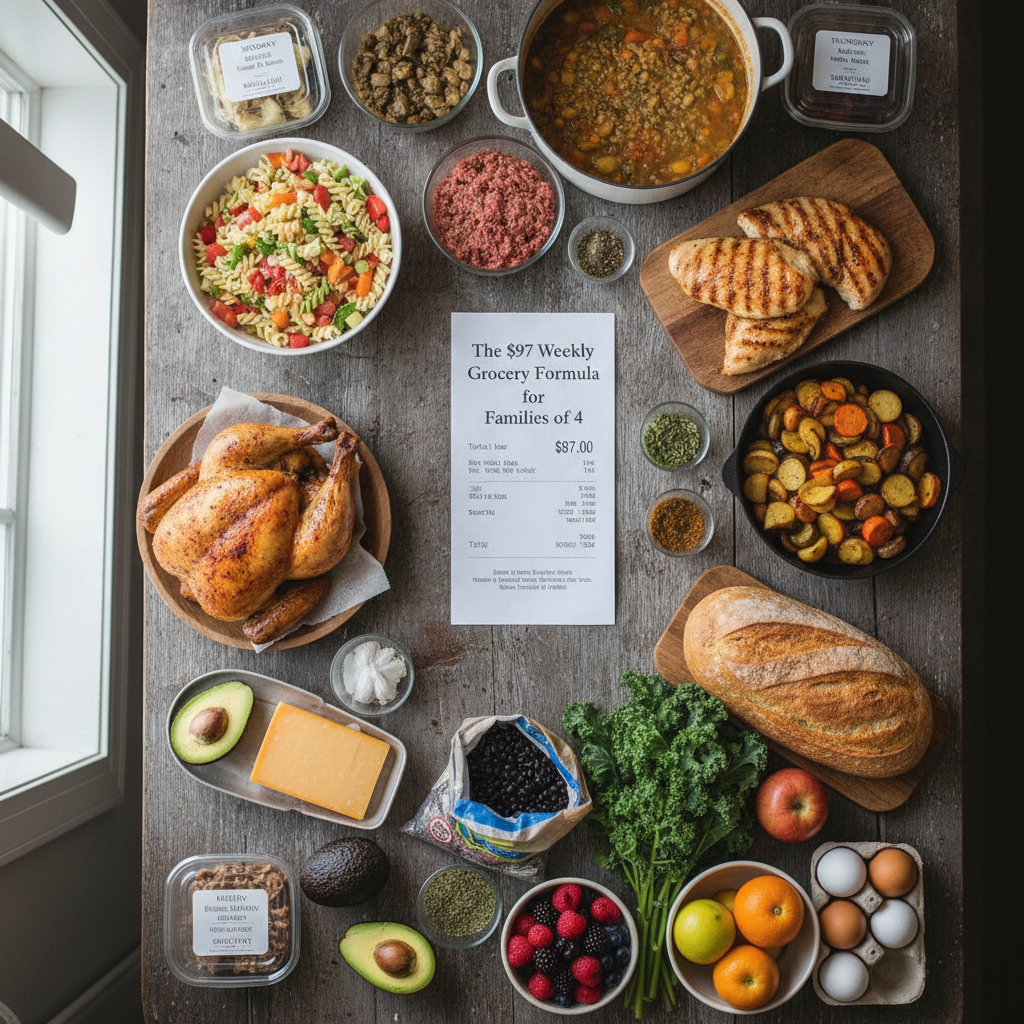
The $97 Weekly Grocery Formula for Families of 4
A repeatable weekly grocery formula, backed by a real $97 receipt, that feeds a family of four on under $100 without eating the same meals every week.
Jun 6, 2026
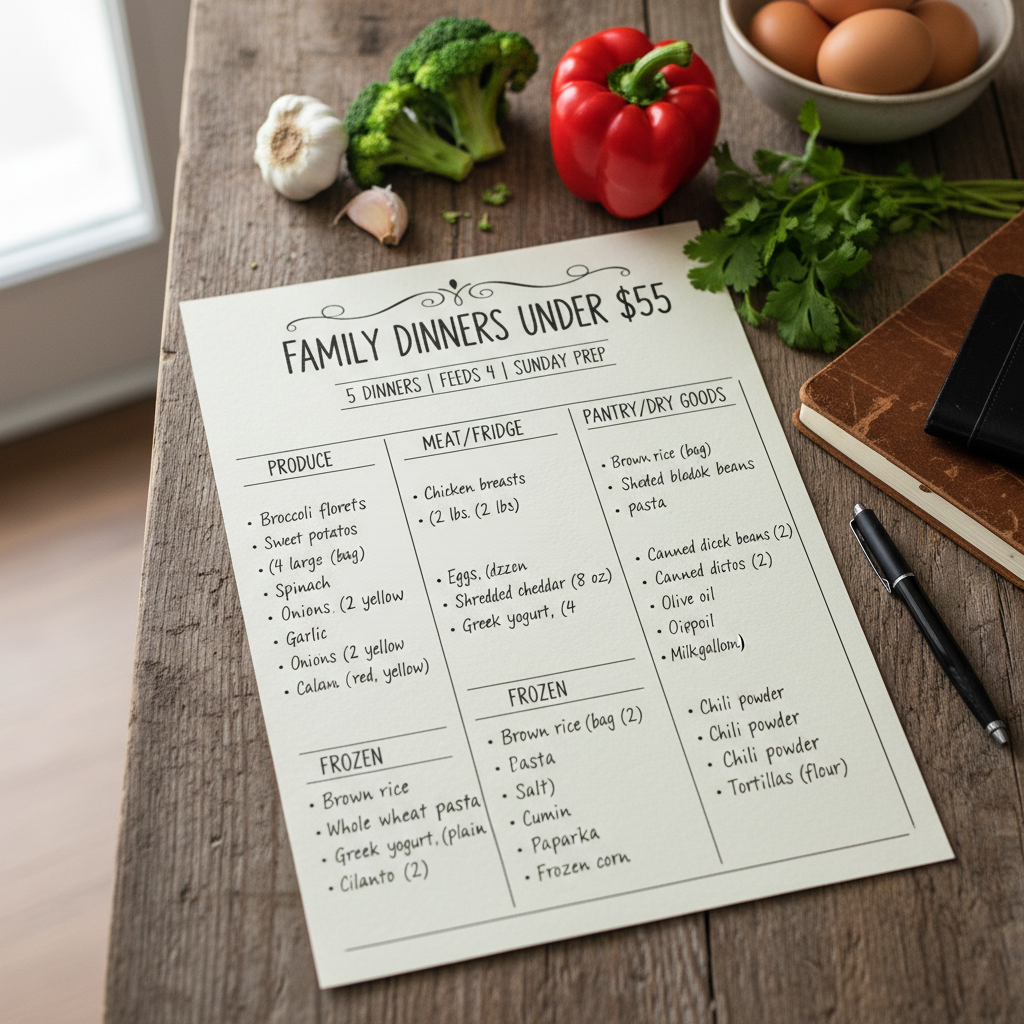
Meal Prep Grocery List Template for 5 Dinners Under $55
A ready-to-copy grocery list template, organized by store section, that cuts Sunday shopping time and keeps a family of 4 under $55 for 5 dinners.
Jun 5, 2026
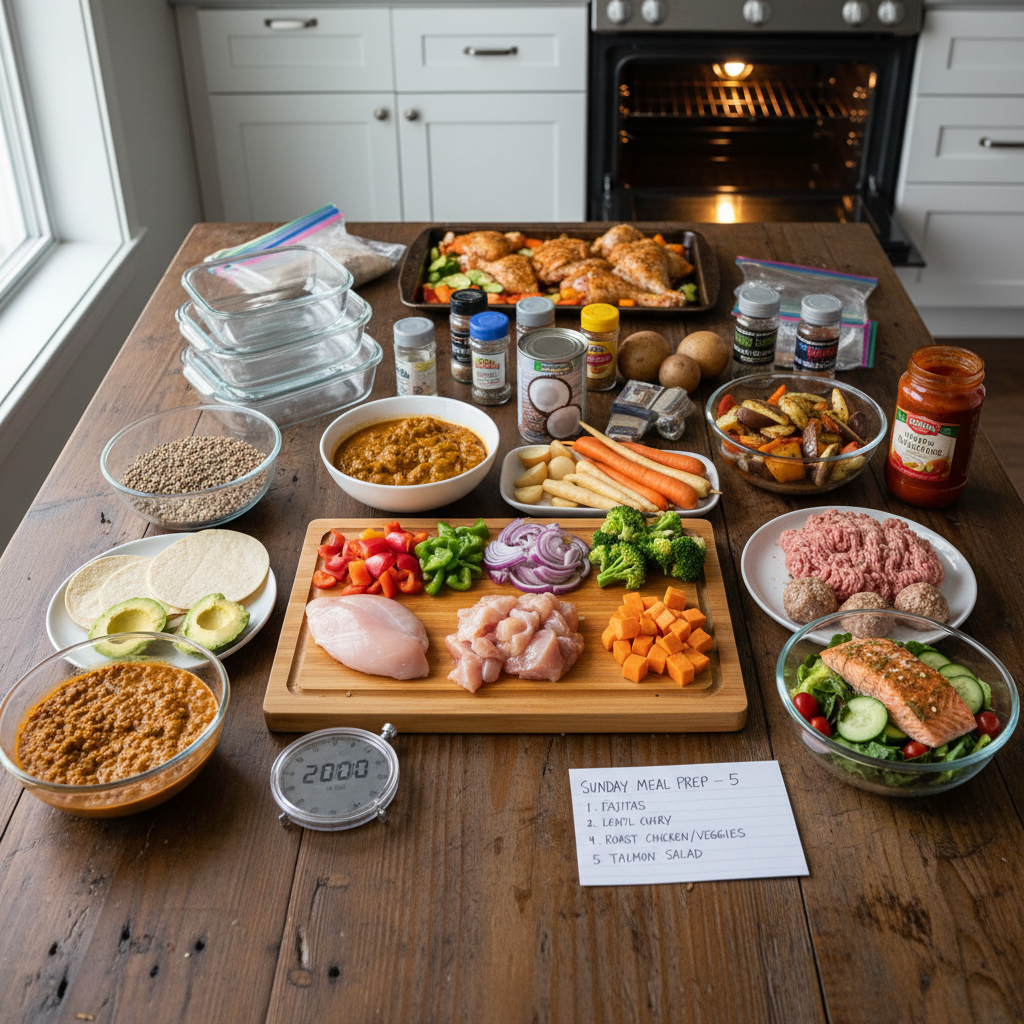
How to Meal Prep 5 Dinners in One Sunday Afternoon (2-Hour Routine)
Follow this timed two-hour Sunday routine — one oven, one burner, one cutting board — and walk away with five real weeknight dinners without a plan falling…
— Try ChefDeck free
Put this into practice this week.
Every new account starts with 14 days of Pro free — no card required.
Get started free