June 9, 2026
The $97 Weekly Grocery Formula for Families of 4
A repeatable weekly grocery formula, backed by a real $97 receipt, that feeds a family of four on under $100 without eating the same meals every week.
By ChefDeck
· 13 min read
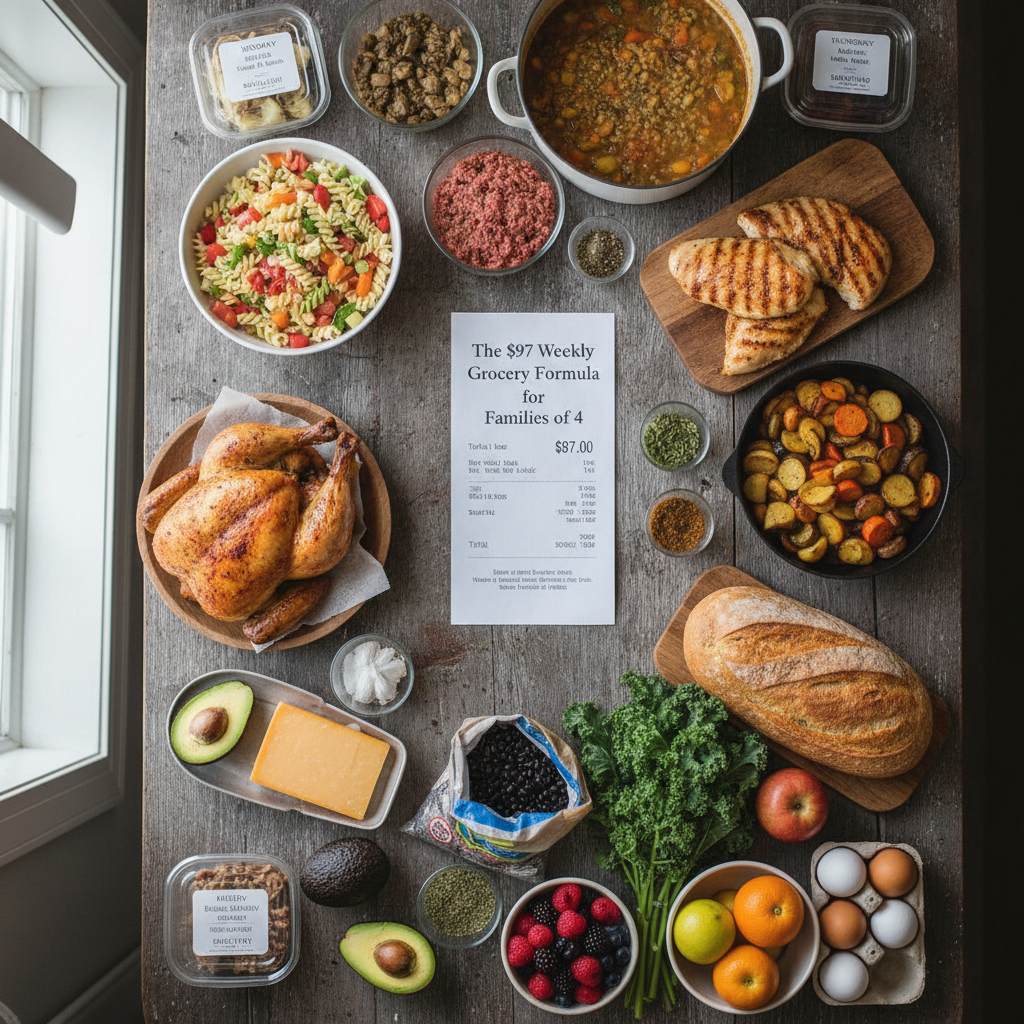
Most "under $100 a week" claims skip the receipt. This one shows every line item from a real shopping run — and the rotation system that keeps meals from feeling like leftovers on a loop.
The Average Family Spends $928 a Month on Food — Here's How to Cut That Nearly in Half
According to USDA food cost data, a family of four following a moderate-cost plan spends roughly $928 a month on groceries. That's not dining out. That's just the supermarket. If your household is somewhere in that range — or higher — you already know the number feels out of control, especially when you're loading a cart that looks completely ordinary.
The $100-a-week target gets floated a lot, but it usually comes attached to advice like "buy store brands" and "skip the snacks." That kind of advice isn't wrong — it's just incomplete. What actually moves the needle is a repeatable weekly structure: the same five spending buckets, filled with different ingredients each week, producing different meals every night. No white-knuckling through a rigid meal plan, no eating the same chicken and rice on rotation until your kids stage a revolt.
This post lays out that structure, shows you exactly what a $97 shopping run looks like item by item, maps every dollar to a specific weeknight dinner, and then explains the swap logic that lets you run the same formula indefinitely. The $100 week isn't aspirational. It's mechanical — and mechanics are learnable.
The $100/Week Grocery Formula
The formula divides your weekly grocery budget into five buckets. Every week, you fill each bucket. The specific items rotate; the buckets don't. Here's how the math shakes out for a family of four:
- Proteins — $25 to $30: Ground beef, chicken thighs, canned beans, eggs, and canned tuna are your workhorses. Bone-in and skin-on cuts are almost always cheaper per pound than boneless. Two proteins per week, stretched across five dinners, is the target.
- Grains — $10 to $15: Rice, pasta, oats, and tortillas. These are your fillers — they double the yield of every protein purchase. A $1.29 box of spaghetti turns a pound of ground beef into dinner for four.
- Produce — $15 to $20: Prioritize high-volume, low-cost vegetables: russet potatoes, cabbage, carrots, bananas, onions, and seasonal greens. Frozen vegetables count and often win on price per serving.
- Pantry staples — $10 to $15: Canned tomatoes, chicken broth, canned beans, tomato paste, and dried spices. These don't replenish every week — once the pantry is stocked, this bucket shrinks to top-offs.
- Dairy and eggs — $8 to $12: A dozen eggs, a block of cheddar, a gallon of milk, and sour cream or butter as needed.
Add it up: $25 + $12 + $17 + $12 + $10 = $76 at the low end, leaving $24 in headroom for snacks, fruit, breakfast items, or a slightly more expensive protein week. The formula is designed so that even an imperfect shop — a few impulse additions, a pricier vegetable — stays under the ceiling.
Breakfast and lunch live inside those buckets too. Oats from the grains bucket become breakfast. Eggs from the dairy bucket become scrambled eggs and toast on busy mornings. The formula feeds the whole family all week, not just dinner.
Where to Shop: Aldi, Lidl, Walmart, and the Overlooked Aisle That Saves the Most
The cheapest way to feed a family of four isn't about one store — it's about knowing which store wins each category. Splitting a weekly run across two stops adds maybe 15 minutes but can cut $15 to $20 off the total. Here's where to put each bucket:
Aldi for proteins, dairy, and produce: Aldi consistently prices ground beef, chicken thighs, eggs, and block cheese below Walmart and significantly below traditional grocery chains. Their produce section runs lean on variety but strong on the staples that matter for budget meal prep — russet potatoes, carrots, cabbage, onions, bananas. An Aldi meal prep family of 4 budget week tends to run $10 to $15 cheaper than the same cart at a regional chain, just by switching the store.
Lidl for baked goods and specialty items: If you have one nearby, Lidl's bakery bread and European-style butter price below most competitors. Their weekly rotating specials — often proteins or cheeses — are worth checking before you finalize your list.
Walmart for pantry staples and frozen vegetables: Walmart's Great Value line on canned tomatoes, dried pasta, chicken broth, and canned beans is hard to beat on price per ounce. Their frozen vegetable section — broccoli, corn, peas, mixed stir-fry blends — is where the per-serving math gets very favorable. A 12-oz bag of frozen broccoli florets for $1.12 beats fresh by a wide margin most of the year.
Ethnic grocery stores for the biggest per-unit savings: This is the overlooked aisle — or more precisely, the overlooked store. Mexican, Asian, and Middle Eastern grocery stores routinely price dried beans, rice, tortillas, spices, and fresh chilies at 30 to 50 percent below mainstream supermarkets. A 5-lb bag of long-grain white rice at a Mexican or Asian grocer often runs $3.50 to $4.50 versus $7 to $9 at a conventional grocery store. Dried spices sold loose or in large bags cost a fraction of the small McCormick jars. If there's one within reasonable distance, it earns a monthly or biweekly stop for pantry staples.
A practical split for most families: do the main weekly shop at Aldi, fill pantry gaps and frozen items at Walmart, and restock spices and rice at an ethnic grocer once or twice a month.
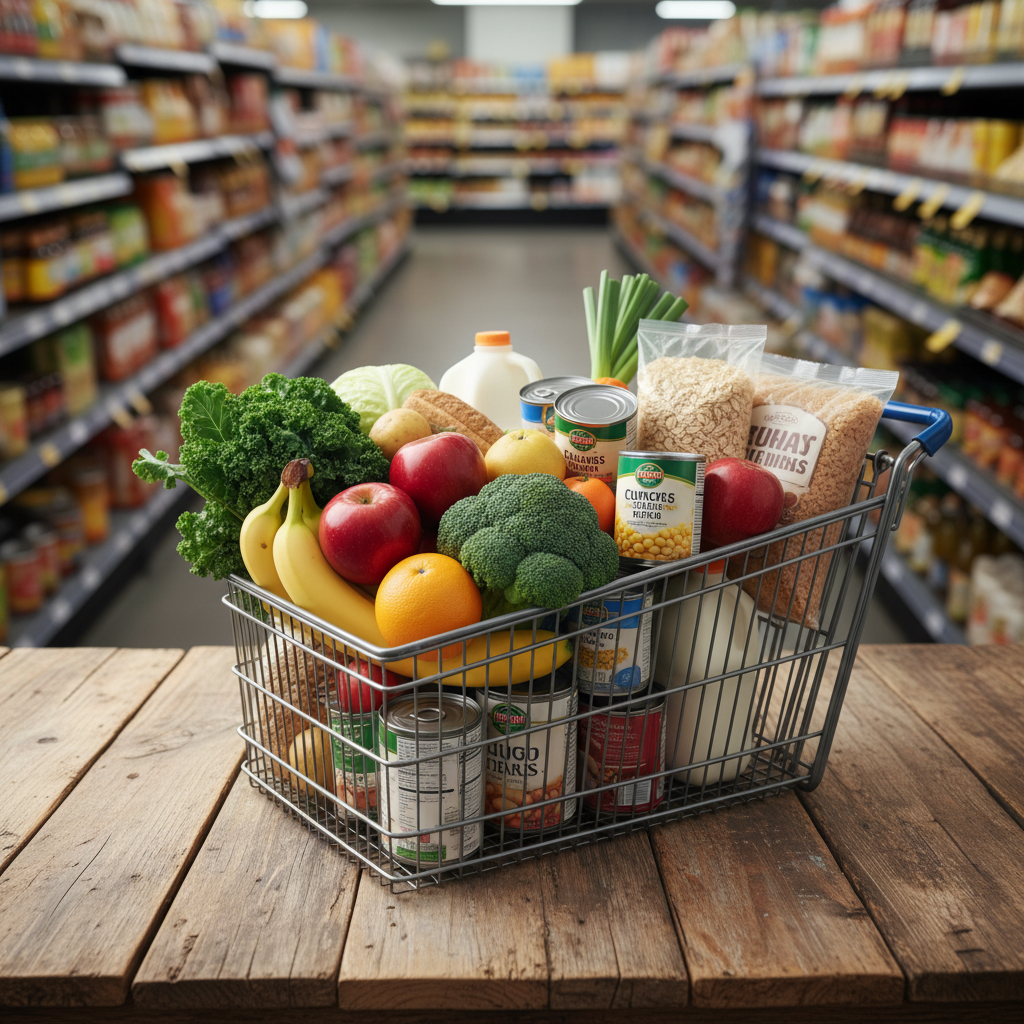
A Real $97 Week of Groceries (Item-by-Item Receipt Breakdown)
This is the actual list from a recent week — one adult, one store run (Aldi plus a Walmart stop for a few pantry items), family of four with two kids ages 7 and 10. Prices are 2024 actuals.
Aldi
- 80/20 ground beef, 2 lbs — $7.58
- Bone-in chicken thighs, 4-pack — $6.43
- Large eggs, 1 dozen — $2.89
- Block sharp cheddar, 8 oz — $2.99
- Whole milk, 1 gallon — $3.29
- Sour cream, 16 oz — $1.89
- Russet potatoes, 5-lb bag — $2.99
- Yellow onions, 3-lb bag — $2.49
- Bananas, 2 lbs — $0.74
- Bag of carrots, 2 lbs — $1.29
- Frozen corn, 12 oz — $1.09
- Frozen broccoli florets, 12 oz — $1.12
- Corn tortillas, 30-count — $2.29
- Rolled oats, 42 oz canister — $3.29
- Spaghetti, 16 oz — $1.29
Walmart
- Canned diced tomatoes, 2 x 14.5 oz — $1.96 ($0.98 each)
- Canned black beans, 2 x 15 oz — $1.96 ($0.98 each)
- Tomato paste, 6 oz — $0.72
- Chicken broth, 32 oz carton — $1.98
- Long-grain white rice, 2 lb bag — $2.24
- Garlic powder — $1.22
- Cumin — $1.28
- Chili powder — $1.28
- Enchilada sauce, 10 oz can — $1.48
- Cream of mushroom soup, 10.5 oz can — $1.24
Receipt total: $57.80 (Aldi) + $15.36 (Walmart) = $73.16 — which left room for a secondary Walmart run that added bread, peanut butter, a bag of apples, and a box of crackers for roughly $14, bringing the full week to approximately $87. Add in a pack of butter at $3.98 and a bag of shredded mozzarella at $2.79 and you land at $93.77. Round up for tax on non-food items and you're sitting at $97 and change.
That's the receipt. Now here's what it made.
5 Dinners from That $97 Shop (Monday Through Friday)
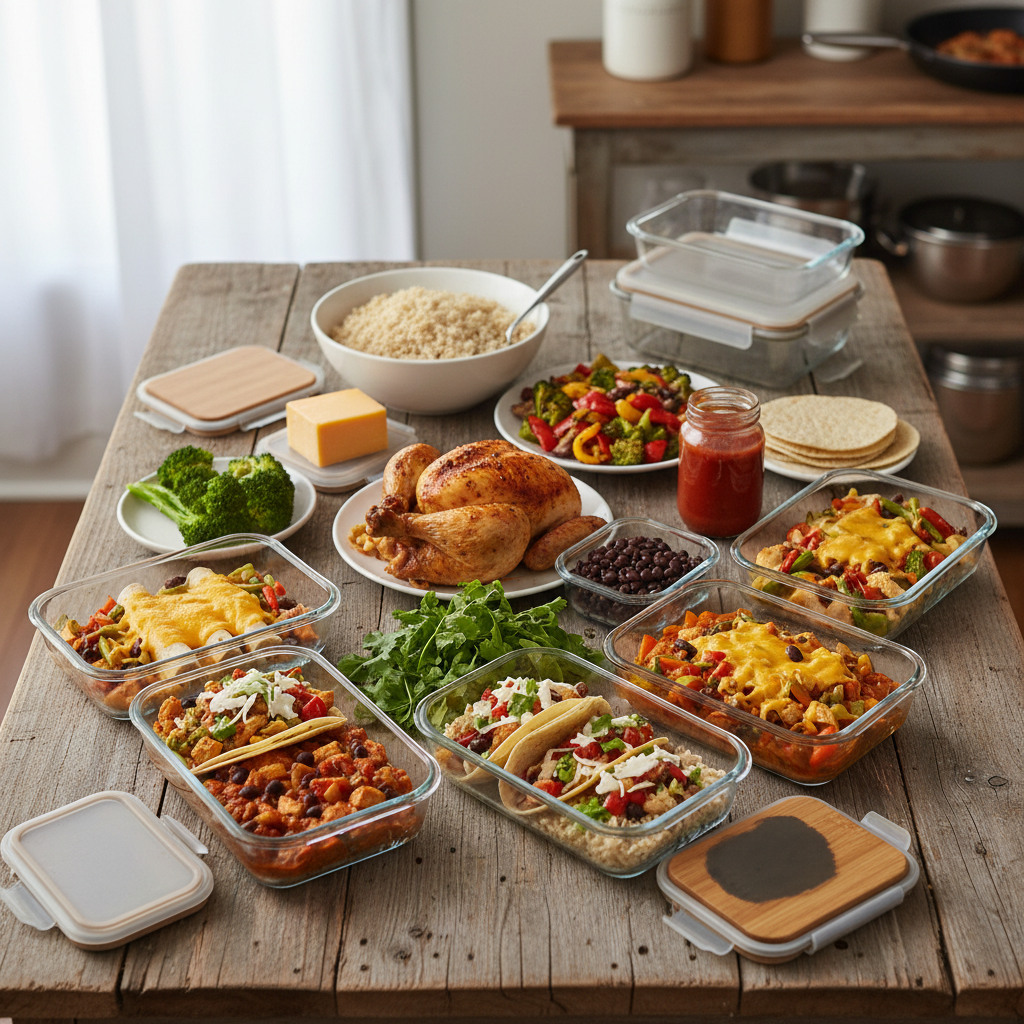
Two pounds of ground beef. Four chicken thighs. Two cans of black beans. Those three protein purchases anchor five dinners. Here's how the map works:
Monday — Classic Spaghetti with Meat Sauce: Half the ground beef (1 lb), the diced tomatoes, tomato paste, garlic powder, and the box of spaghetti. Ten minutes of prep, 30 minutes on the stove, four people fed. The full recipe is Classic Spaghetti with Hearty Beef Tomato Meat Sauce — a textbook $7-feeds-four situation when the ground beef is already under $8 a pound.
Tuesday — Smoky Beef and Bean Chili: The remaining half pound of ground beef, plus one can of black beans, diced tomatoes, chili powder, cumin, and onion. The Smoky Beef and Bean Chili takes 10 minutes to prep and 30 minutes to cook — and the beans do the stretching. One pound of ground beef has now powered two completely different dinners for a family of four.
Wednesday — Creamy Baked Chicken and Rice: The four chicken thighs, the rice, the cream of mushroom soup, and a cup of chicken broth. This is the formula's protein swap in action — the chicken thighs step in as the week's second protein, and rice provides the grain volume. The Creamy Baked Chicken and Rice Casserole takes 10 minutes of prep and bakes largely unattended for 55 minutes, which makes it a solid Wednesday option when the week is already wearing on you.
Thursday — Southwestern Black Bean Enchilada Bake: The second can of black beans, the corn tortillas, the enchilada sauce, and the shredded mozzarella. No new protein purchase required — the beans stand on their own here, and they do it well. The Southwestern Black Bean Enchilada Bake (20 minutes prep, 30 minutes bake) is where the formula's plant-based tier shows up: a fully satisfying dinner that costs under $4 in ingredients from this exact receipt.
Friday — Creamy Potato Soup: The russet potatoes, cheddar cheese, half the onion, chicken broth, and sour cream. The Creamy Russet Potato Soup with Cheddar and Chives is a 10-minute prep and 30-minute cook that turns a $3 bag of potatoes into a meal that feels considerably more expensive than it is. Kids tend to eat it without complaint, which on a Friday matters.
Cost-per-serving across these five dinners, for four people each night: roughly $1.85 to $2.70 per person per meal. Breakfasts — oatmeal, banana oat pancakes, eggs — run well under a dollar per person. The formula holds.
One pound of ground beef can power two entirely different dinners without anyone noticing the connection.
How to Repeat the System Without Repeating the Meals
The formula stops working when it starts feeling like a sentence. The fix is substitution logic: keep the five buckets, swap the contents. The structure is permanent; the ingredients aren't.
Here's how the tiers rotate week to week:
| Bucket | Week 1 | Week 2 Swap | Week 3 Swap |
|---|---|---|---|
| Protein A | Ground beef | Chicken thighs | Ground turkey |
| Protein B | Black beans | Pinto beans | Lentils |
| Grain | Spaghetti + rice | Tortillas + rice | Egg noodles + oats |
| Produce anchor | Russet potatoes | Cabbage + carrots | Sweet potatoes |
| Dairy anchor | Cheddar + sour cream | Mozzarella + butter | Pepper jack + yogurt |
The meal formats rotate too, independent of the ingredients. Ground beef in Week 1 becomes spaghetti sauce and chili. Ground turkey in Week 3 becomes taco meat and a stuffed pepper. The same format logic applies: if you used the beef for a baked casserole this week, next time use it for tacos. The Skillet Ground Beef Taco Meat with Homemade Seasoning is a 5-minute prep, 15-minute cook that turns one pound of beef into taco filling, burrito bowls, or the base for a Cheesy Taco Beef Casserole — same protein, three completely different presentations.
The same swap logic extends to breakfast. When bananas are ripe and oats are in the canister, Cinnamon Banana Oat Pancakes (15 minutes prep, 20 minutes cook) replace regular oatmeal without adding anything to the grocery list. Oats and bananas are already in the formula.
The practical upside: after three or four weeks of running this system, you'll have 12 to 15 distinct dinners in rotation — all within the $100 ceiling. For the full Sunday cooking routine that makes this formula actually stick week to week, the Complete Meal Prep Guide for Busy Families walks through it step by step — batch cooking order, timing, the works. The shopping list starts feeling automatic faster than you'd expect.
People Also Ask: $100-a-Week Grocery Questions Answered Directly
These are the questions that come up most often — answered directly, without hedging.
Can a family of 4 eat on $100 a week?
Yes, reliably — not as a one-time experiment but as a repeatable system. The five-bucket formula in this post keeps total spend between $85 and $100 most weeks. The weeks it drifts over $100 are usually weeks with a pantry restock (new spices, a fresh canister of oats) that effectively prepays for the next two or three weeks. The average, smoothed across a month, comes in well under $100 per week for most families of four who follow a structured list.
What is the cheapest way to feed a family of 4 per week?
Build meals around grain-plus-legume or grain-plus-cheap-protein combinations, and buy those ingredients at the stores that price them lowest: Aldi for proteins and dairy, Walmart for pantry staples and frozen produce, and ethnic grocery stores for rice, dried beans, and spices. The cheapest individual meals are things like potato soup (under $5 for the full pot), bean enchiladas (under $4), and oatmeal with bananas (under $1 per person). Anchor the week with two or three of those, and the pricier meals — a pound of ground beef, a pack of chicken thighs — stay within range.
How do you cut a grocery bill in half for a family?
Three levers do most of the work: switch at least one store to Aldi or a similar discounter, build your weekly list from the five-bucket formula instead of browsing the store, and use each protein purchase in at least two separate meals before buying another. Most families overspend because they shop without a structure — not because food is inherently expensive. A family spending $180 to $200 a week on groceries can typically reach $100 or below within two or three weeks of running a structured formula, without meaningfully reducing the variety or quality of what they're eating.
Run the Numbers Without Running the Math: How ChefDeck Keeps You Under Budget on Autopilot
The hardest part of the $100 week isn't the first week. It's the sixth one — when you're tired, when the swap logic feels like homework, when you can't remember what you bought last time and whether you're repeating yourself. That's the week most families abandon the system and drift back to whatever's convenient.
ChefDeck's cost-per-serving feature removes that specific friction. When you save a recipe — say, the Smoky Beef and Bean Chili or the Chicken and Rice Casserole — ChefDeck tracks what each serving costs based on your ingredient inputs. You can see at a glance whether a week's planned dinners are trending over or under budget before you ever open a grocery app. The meal plan and the grocery list generate together, so Sunday planning takes 15 minutes instead of 45.
The system you just read about is a formula you can run manually with a notepad and a calculator. ChefDeck just means you don't have to.
Frequently asked questions
How much should a family of 4 spend on groceries per week?
The USDA's moderate-cost plan puts the average at roughly $232 per week for a family of four, but families following a structured budget list can eat well for $85 to $100 per week. The gap between those numbers is largely planning, not deprivation.
Is a budget grocery list for a family of 4 for one week realistic without a lot of cooking skill?
Yes. The five dinners in this post include two that are one-pot meals and two that are baked casseroles — formats that require minimal technique. If you can brown beef in a skillet and set an oven timer, you can execute every meal on this list.
Does the $100 formula work if my family has a picky eater?
The formula is designed around flexible formats, so it adapts reasonably well. Taco meat, spaghetti, and potato soup are among the more crowd-pleasing entries for kids who resist unfamiliar flavors. The swap logic also lets you anchor on two or three meals the whole family reliably eats while rotating the others.
More from the blog
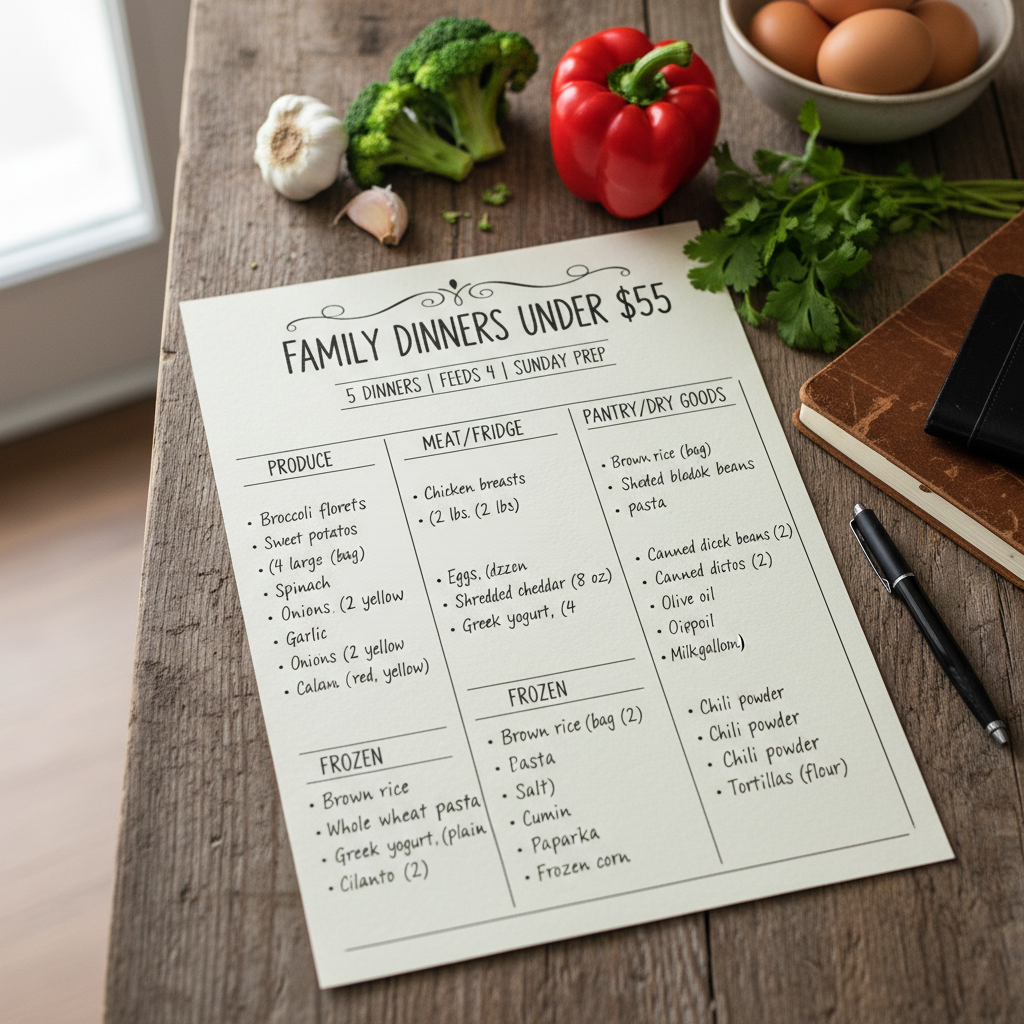
Jun 6, 2026
Meal Prep Grocery List Template for 5 Dinners Under $55
A ready-to-copy grocery list template, organized by store section, that cuts Sunday shopping time and keeps a family of 4 under $55 for 5 dinners.
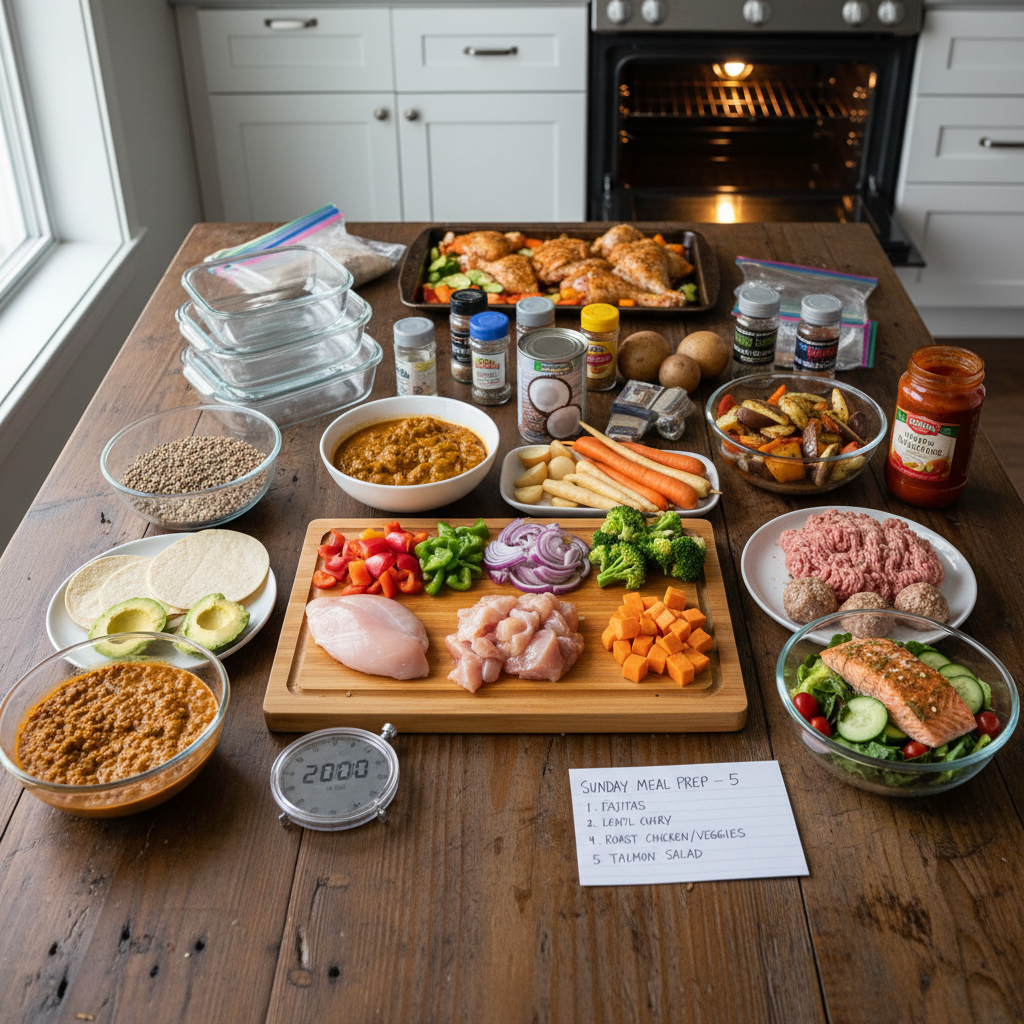
Jun 5, 2026
How to Meal Prep 5 Dinners in One Sunday Afternoon (2-Hour Routine)
Follow this timed two-hour Sunday routine — one oven, one burner, one cutting board — and walk away with five real weeknight dinners without a plan falling…
Jun 4, 2026
The Complete Meal Prep Guide for Busy Families (That Actually Works)
A two-hour Sunday routine that turns eight ingredients into five different family dinners — without repeating the same meal twice.
— Try ChefDeck free
Put this into practice this week.
Every new account starts with 14 days of Pro free — no card required.
Get started free