May 30, 2026
Plan 5 Weeknight Dinners Before Monday in Just 30 Minutes
Follow a single 30-minute Sunday planning session to lock in five weeknight dinners before the week starts, so 7pm decisions disappear entirely.
By ChefDeck
· 12 min read
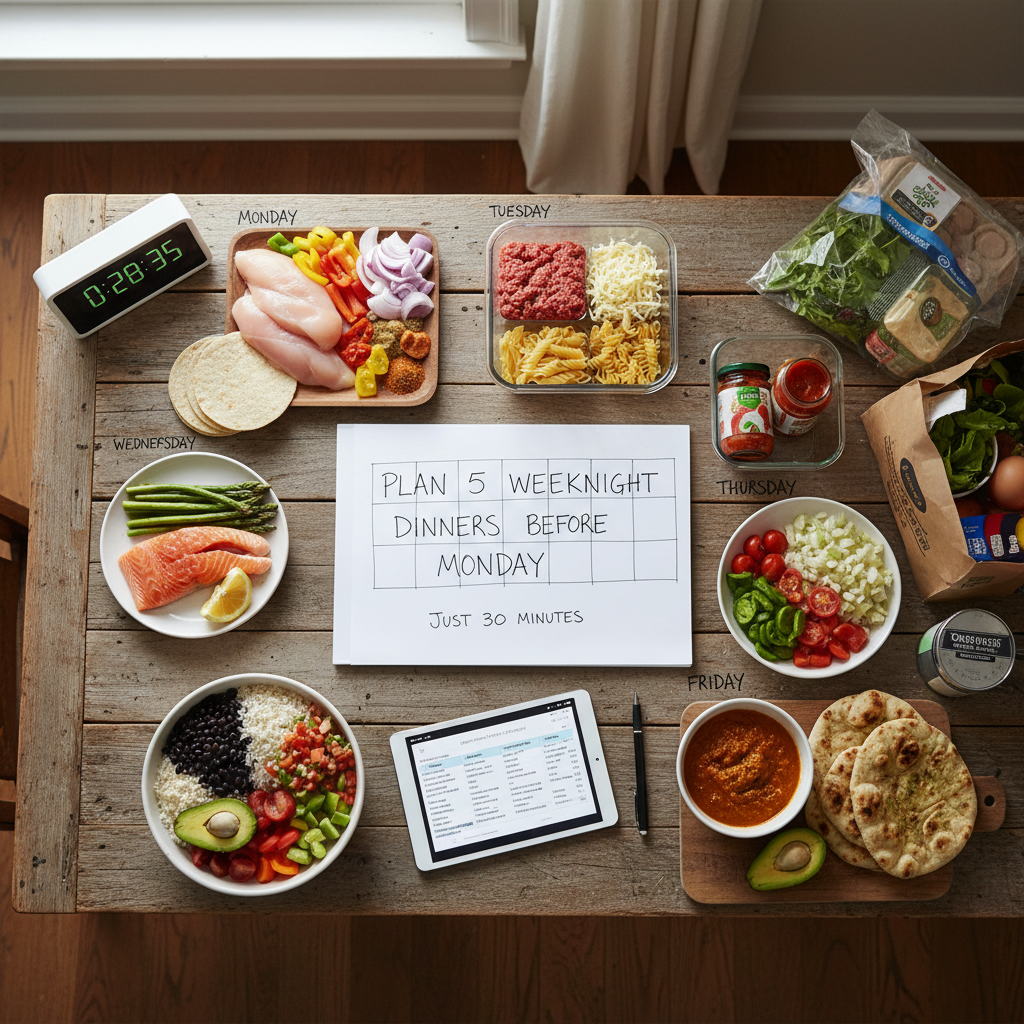
You don't need more time to cook — you need the decisions already made. A single half-hour on Sunday is enough to lock in every weeknight dinner before the week even starts.
The Real Cost of Deciding What's for Dinner at 7pm
You walk through the door after a long commute, bag still on your shoulder, and someone — or some part of your own brain — immediately asks: what's for dinner? You've already made hundreds of decisions today. You've navigated a packed train, handled emails that could have been meetings, and maybe sat in traffic that added forty minutes to a commute that was already too long. The last thing you have left in the tank is a creative, nutritious answer to that question.
This is decision fatigue, and it's a documented psychological reality, not a personal failing. When your mental energy is depleted, your brain defaults to the easiest available option — which, at 7pm, is usually a delivery app or whatever's fastest at the drive-through. The spending adds up quickly (the average American household spends over $300 a month on food delivery), but so does the frustration of knowing you have groceries sitting unused in the fridge.
The fix isn't willpower. It isn't a complicated meal prep marathon on Sunday where you cook for four hours and pack fourteen containers. The fix is removing the decision entirely — before the week starts, before you're tired, before that 7pm brain fog sets in. That's what weekly meal planning for commuters actually looks like in practice.
Why a 30-Minute Planning Session Beats Winging It Every Night
Think about the math. If you spend even ten minutes every weeknight standing in front of the fridge trying to figure out dinner — and that's a conservative estimate — that's nearly an hour of low-quality, stressful thinking spread across five nights. One focused Sunday session cuts that to zero.
But the time savings are only part of it. When you plan ahead, you shop for exactly what you need. That means less food rotting in the crisper drawer, fewer duplicate pantry items, and a grocery trip that takes twenty minutes instead of forty-five because you already know what you're getting. The USDA estimates that American households throw away between 30 and 40 percent of their food supply — most of it from unplanned buying and forgotten ingredients.
There's also a compounding effect on cook time itself. When you already know Monday is sheet-pan chicken night, you can thaw the protein Sunday evening, chop vegetables ahead, and walk in Monday at 7:15pm ready to actually cook rather than decide. A meal that would take 45 minutes of stressed, scattered cooking takes 25 minutes when you're already set up for it. Planning is, in a very real sense, the most efficient cooking you'll do all week.
One focused Sunday session does more for your weeknights than any kitchen gadget you'll ever buy.
The Commuter's Rule of Five: How to Choose Dinners That Actually Survive a Long Day
Not every recipe belongs on a weeknight for someone who gets home after 7pm. The problem with most meal planning advice is that it ignores the reality of how exhausted you actually are when you walk through the door. So before you pick five dinners, run each candidate through three filters.
- Hands-off cook time. Look for recipes where the oven or the stovetop does most of the work once you've done a short burst of prep. A dish that needs 15 minutes of active prep and then bakes for 55 minutes is far friendlier to a tired commuter than one requiring 45 minutes of continuous stirring. The Creamy Chicken and Rice Bake is a textbook example: 15 minutes of prep, then into the oven while you change out of your work clothes. You come back to a finished meal.
- Pantry-lean ingredients. Recipes that rely mostly on shelf-stable staples — canned beans, dried pasta, rice, jarred sauces, spices — are more resilient to a chaotic week. If the only fresh ingredient is one protein you bought Sunday, a last-minute schedule change won't derail the whole plan. The fewer trips to the store a recipe requires mid-week, the better.
- Reheat-friendly construction. Soups, braises, casseroles, and rice-based dishes hold up beautifully the next day. That means a portion left over from Tuesday can quietly become Thursday's lunch or a backup dinner if Wednesday goes sideways. If a dish turns sad and dry when reheated, it's not a good weeknight candidate — regardless of how good it tastes fresh.
Run your five dinner ideas through those three filters on Sunday morning and you'll notice right away which recipes belong and which ones are better saved for a relaxed weekend evening.
The 30-Minute Sunday Planning Walkthrough, Step by Step
Here's the exact sequence. Set a timer for 30 minutes, sit down with your phone or a notepad, and work through this in order. Don't skip steps — the whole system depends on them talking to each other.
- Audit the fridge and pantry (5 minutes). Before you plan anything, see what you already have. Check for proteins that need to be used this week, produce that's a day or two from turning, and pantry staples you're running low on. This single step prevents double-buying and helps you build meals around what's already there.
- Pick five dinners using the Rule of Five (10 minutes). Choose one dinner per night, Monday through Friday. Aim for variety in protein and cooking method so you're not eating ground beef five nights in a row. Pull recipes from a reliable source and confirm prep and cook times before committing. If you're stuck, the ChefDeck meal planner has a filtered recipe search that lets you sort by total time and cooking method.
- Build a consolidated grocery list (10 minutes). Go through each recipe's ingredient list and write down only what you don't already have. Group by store section — produce, proteins, dairy, pantry — so your shopping trip moves in one direction through the store. If you're using a digital planner, this list often generates itself.
- Assign meals to nights by energy level (5 minutes). This is the step most people skip, and it's the one that determines whether your plan survives Wednesday. Think about your week realistically. Monday you're fresh off the weekend — use it for a slightly more involved meal. Tuesday through Wednesday tend to be peak busy; slot your fastest, most hands-off recipes here. Thursday you're tired but can see the weekend; something comforting works well. Friday is for your easiest fallback or a planned takeout night with no guilt attached.
That's it. Thirty minutes, and the week is decided. For more on building a broader prep routine around this, the guide to meal prep for beginners covers how to extend Sunday into a light cooking session if you want to get even further ahead.
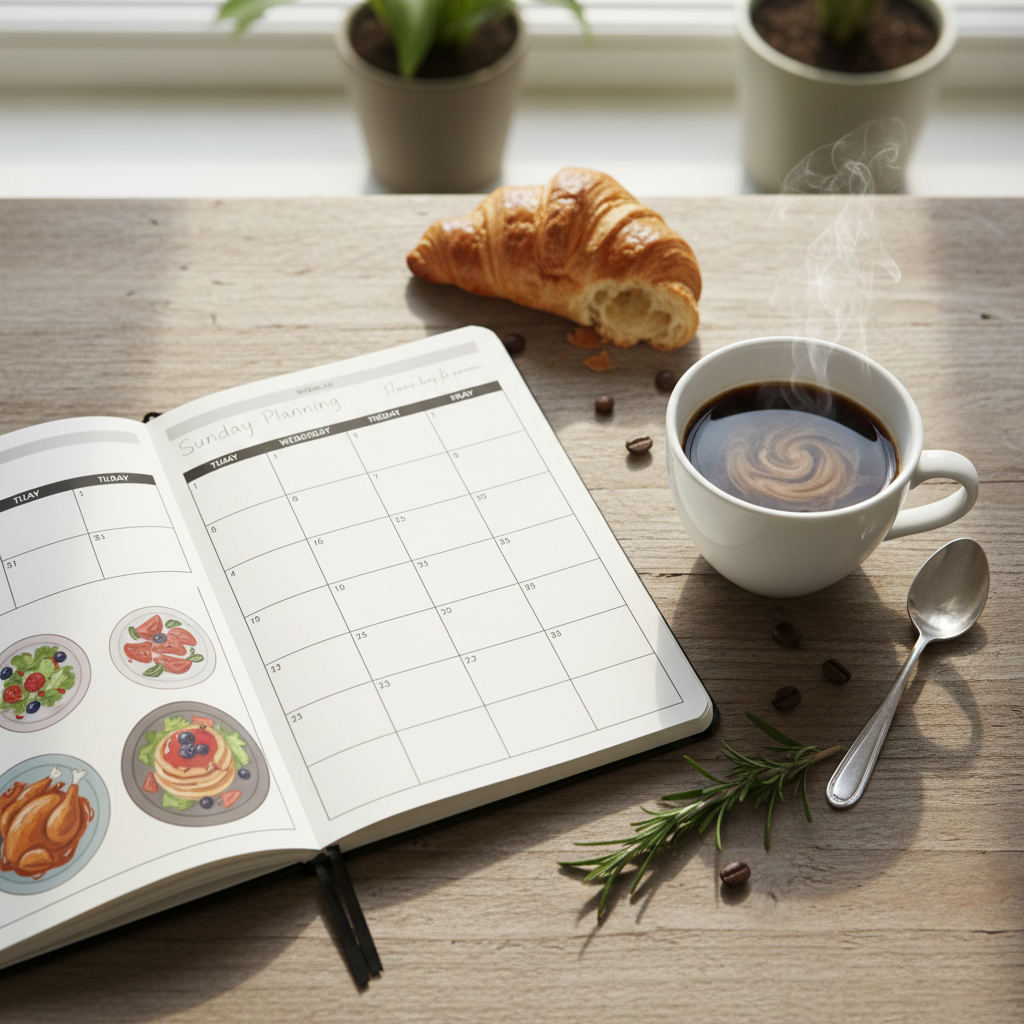
How to Use ChefDeck's Meal Planner to Run This System in Half the Time
The manual process above works fine with a notepad and pen. But if you want to move faster, ChefDeck's meal planner is built around exactly this workflow. You search and save recipes, drag them onto a weekly calendar by night, and the planner automatically consolidates ingredient quantities into a single grocery list — no manual cross-referencing required.
The part that saves the most time is the grocery list generation. Instead of flipping between five recipe pages and copying things onto a notepad, the planner merges everything: if two recipes both call for garlic, it adds the amounts together. You end up with one clean, grouped list that's ready to share with whoever's doing the shopping, or to pull up in the store aisle on your phone.
The drag-and-drop calendar also makes the "assign by energy level" step genuinely fast. You can see the whole week at a glance, shift meals around in seconds if you realize you've front-loaded too much active cooking on Wednesday, and save the whole plan as a template to reuse or adjust in future weeks. The system you build once keeps compounding.
A Sample Commuter Week: What Five Real Dinners Look Like on the Calendar
Here's a full Monday-through-Friday plan built using the Rule of Five. Every meal clears all three filters — hands-off time, pantry-lean ingredients, and reheats well — and the nights are assigned by realistic energy level.
| Night | Dinner | Total Time | Why It Fits |
|---|---|---|---|
| Monday | Honey Garlic Chicken Stir-Fry Bites | 25 min | You're freshest early in the week; 10 min prep keeps it easy |
| Tuesday | Creamy Chicken and Rice Bake | 70 min (15 active) | Oven does the work; walk away after prep |
| Wednesday | Soy-Ginger Beef and Broccoli | 30 min | Under 30 minutes total, pantry-lean, one pan to clean |
| Thursday | Cheesy Taco Beef Casserole | 50 min | Comfort food that reheats well; leftovers handle Friday lunch |
| Friday | Classic Spaghetti with Beef Tomato Meat Sauce | 40 min | Familiar, low-stress, forgiving — the ideal end-of-week fallback |
Notice what's not on this list: anything that requires a technique you'd have to look up mid-cook, anything with more than a handful of fresh ingredients that might turn by Thursday, or anything that needs to be eaten immediately and doesn't reheat. Every meal here has a reasonable margin for error if you're running late or distracted.
You could just as easily swap Thursday's casserole for a batch of Simple Smoky Beef and Bean Chili — 10 minutes of prep and 30 minutes on the stove, and it only gets better as leftovers. Or drop in the Southwestern Black Bean Enchilada Bake for a meatless night that still feels substantial. The template is flexible; the structure is what matters.
The Two Mistakes That Blow Up a Meal Plan by Wednesday
Even a well-built plan can unravel mid-week if you walk into it with two common blind spots. Knowing about them ahead of time is usually enough to avoid them.
Mistake one: an overambitious mid-week recipe. It's Sunday, you're feeling optimistic, and you decide that Wednesday night is a great time for a slow-braise or a recipe with twelve components. It isn't. Wednesday is statistically the most common night for meal plans to fail because it sits at the peak of the week's accumulated fatigue. The Skillet Ground Beef Lasagna is a useful example here — it delivers all the comfort of classic lasagna in a single skillet in under 40 minutes. That's the right level of ambition for mid-week: satisfying without being demanding. Any recipe that requires more than 15 minutes of active hands-on work on a Wednesday is a risk. Save the elaborate stuff for Sunday, when you actually want to cook.
Mistake two: no backup night. Something will go sideways at least once. A meeting runs long, a kid gets sick, the commute takes an extra hour. If every night is planned as a "must execute" dinner, one disruption cascades into two skipped meals and a plan that's effectively abandoned by Thursday. Build Friday as a flexible night from the start — either your easiest recipe or a designated takeout slot. That single buffer absorbs most of the week's surprises without touching the other four nights.
Your Next Sunday Starts Here: A 5-Slot Planning Template
The fastest way to make this routine stick is to do it once with as little friction as possible. Fill in the template below this Sunday — on paper, in a notes app, or directly in the ChefDeck planner. The goal is one complete pass before you've had time to talk yourself out of it.
| Night | Dinner | Prep (min) | Cook (min) | Freezer item to thaw Sunday? |
|---|---|---|---|---|
| Monday | ||||
| Tuesday | ||||
| Wednesday | ||||
| Thursday | ||||
| Friday / backup |
The last column is the one most people forget. Noting what needs to come out of the freezer Sunday night is what closes the gap between a plan on paper and a meal on the table by 7:30pm.
If you'd rather skip the paper version entirely, open the ChefDeck meal planner, search the recipes from the sample week above, and drag them onto your calendar. Your grocery list will be ready before you finish your coffee. From there, the week is handled — and Tuesday's 7pm question has already been answered.
Frequently asked questions
How do I meal plan when I have no time to cook on weeknights?
Focus on recipes with short active prep times and long hands-off cook times — oven bakes and one-pot dishes that work while you decompress. Planning those meals on Sunday means the mental work is already done when you walk in the door, and execution becomes mechanical rather than creative.
How many meals should I plan per week?
Five is a practical target for most commuters — one per weeknight, with the understanding that Friday doubles as a flex night if the week goes sideways. You don't have to cook all five; the plan just ensures you never have to decide from scratch again.
What if my week changes and I can't cook the meal I planned?
Assign meals by energy level, not by date, and keep Friday loose. If Tuesday's dinner moves to Thursday because of a late night at work, nothing breaks — the groceries are already there and the decision is still made. Flexibility is built into the system when you treat the plan as a menu, not a schedule.
Is this kind of meal planning useful for working parents?
Especially so. A weeknight dinner planning system for working parents needs to survive not just long commutes but unpredictable kid schedules, picky eaters, and evenings when everyone arrives home at different times. Choosing reheat-friendly, crowd-pleasing recipes and assigning a backup night handles most of those curveballs without requiring a new plan every week.
More from the blog
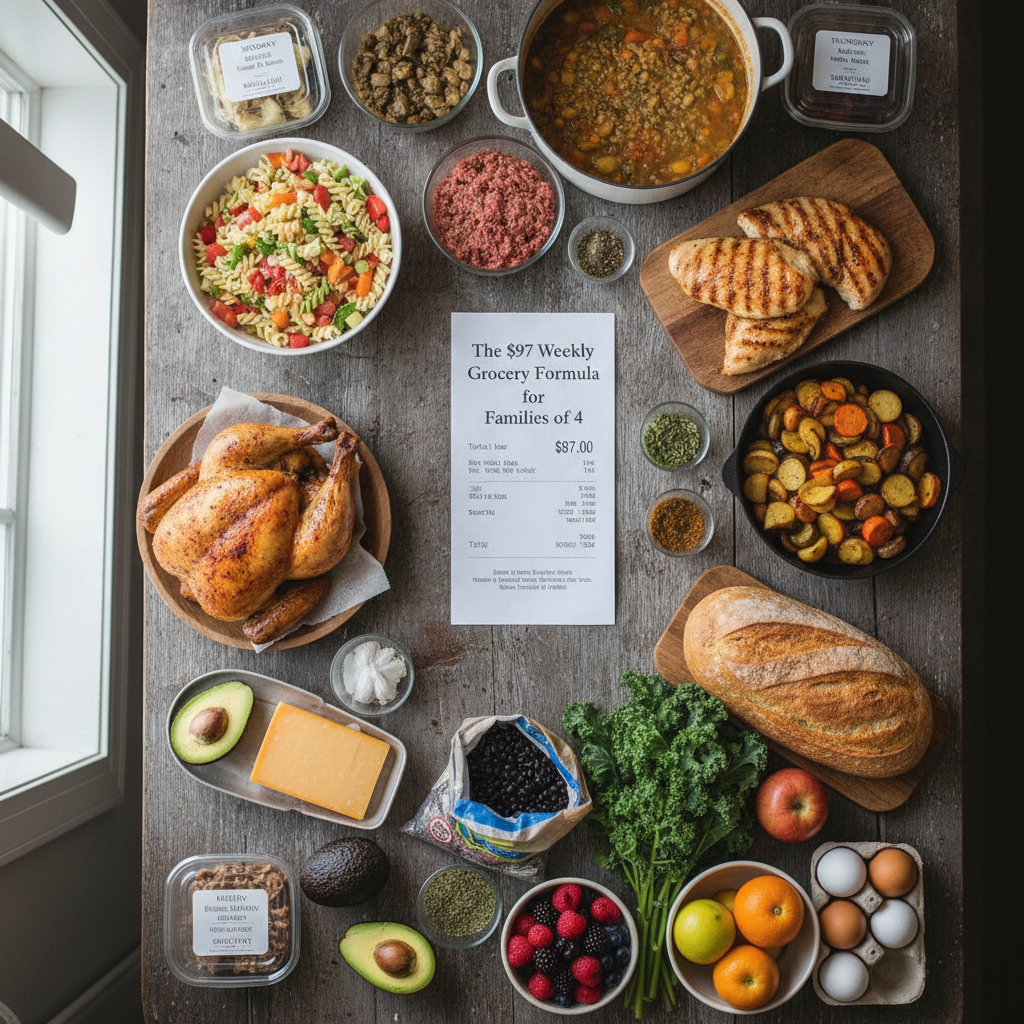
Jun 9, 2026
The $97 Weekly Grocery Formula for Families of 4
A repeatable weekly grocery formula, backed by a real $97 receipt, that feeds a family of four on under $100 without eating the same meals every week.
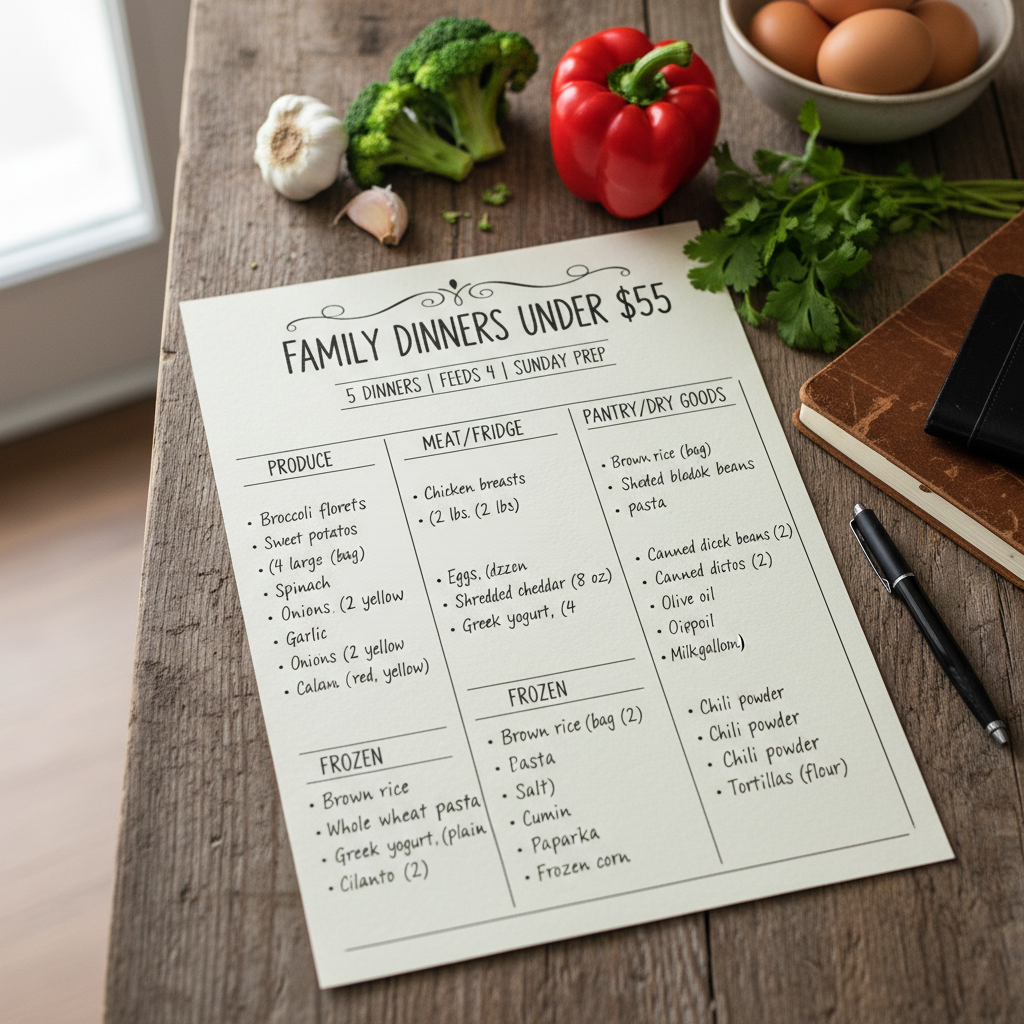
Jun 6, 2026
Meal Prep Grocery List Template for 5 Dinners Under $55
A ready-to-copy grocery list template, organized by store section, that cuts Sunday shopping time and keeps a family of 4 under $55 for 5 dinners.
Jun 5, 2026
How to Meal Prep 5 Dinners in One Sunday Afternoon (2-Hour Routine)
Follow this timed two-hour Sunday routine — one oven, one burner, one cutting board — and walk away with five real weeknight dinners without a plan falling…
— Try ChefDeck free
Put this into practice this week.
Every new account starts with 14 days of Pro free — no card required.
Get started free