May 19, 2026
Meal Prep for Commuters: 5-Day Lunch Plan That Actually Travels
Skip the sad desk lunch. This commuter meal prep guide covers food-safe containers, a 2-session weekly schedule, and 5 lunch ideas that survive the commute intact.
By ChefDeck
· 10 min read

Meal prep for commuters solves a specific problem: you leave early, get home late, and the last thing you want to do is figure out dinner from scratch. This guide walks through everything that actually matters — what containers hold up during a commute, how to keep food safe on the go, which commuter lunch ideas travel well, and how to build a prep routine that fits a busy week without taking over your Sunday. Food safety on a commute is covered too, since a long train ride can push perishable food into the danger zone faster than most people expect.
Choosing the best containers for commuting with food
The right container makes the difference between lunch that arrives in good shape and soup in your bag. A few things to look for when shopping:
- Leak-proof lids — twist-lock or clip lids beat snap lids for bags and backpacks
- Separate compartments if you want to keep sauces and dry components apart until you're ready to eat
- Microwave-safe material if you'll reheat at the office (glass and certain BPA-free plastics both work)
- A size that fits your bag without wasted space — most adults do fine with a 3–4 cup container for lunch
- Wide, flat shapes rather than tall and narrow, which tip more easily in a bag
Glass containers (like Pyrex or similar store-brand options starting around $10 for a set) are easy to clean and don't hold odors, but they're heavy. Lightweight BPA-free plastic containers from brands like Rubbermaid or OXO travel better if you're walking or biking. Stainless steel bento-style boxes are another option if you prefer to skip plastic entirely.
For hot soups and stews, a wide-mouth insulated thermos is worth having. A good one keeps food warm for 4–5 hours, which covers most commute windows. Look for one that's truly wide-mouth so you can actually eat from it directly.

Food safety during transit: what you actually need to know
The USDA's food safety guidelines are clear: perishable food shouldn't sit in the "danger zone" (between 40°F and 140°F) for more than two hours total. For commuters, that clock starts the moment food leaves your refrigerator. Here's how to manage it:
- Pack cold food straight from the fridge into an insulated lunch bag with a frozen ice pack — this keeps temps safe for 4–5 hours
- If your commute is long and there's no fridge at work, go with two ice packs instead of one
- Hot food in a preheated thermos stays above 140°F long enough to be safe for a 4–5 hour window
- Avoid packing foods that are especially prone to spoiling fast: egg-based dressings, cut melon, and anything with a creamy dairy sauce that hasn't been fully chilled
- When in doubt, refrigerate at work as soon as you arrive — most offices have a breakroom fridge
A simple $8–$12 insulated lunch bag is enough for most commuters. You don't need a fancy cooler. What matters is that the bag is actually insulated (foam-lined, not just fabric) and that you use a proper ice pack, not just a water bottle.
For more detail on food safety timelines, the FDA's safe food handling guide is a reliable reference.
Make-ahead commuter lunch ideas that travel well
Not every recipe is a good commute companion. Dishes with a lot of liquid, delicate greens that wilt fast, or components that go soggy quickly are frustrating to deal with on a train or at a desk. These categories tend to hold up well:
Grain and protein bowls
Cook a batch of brown rice, farro, or quinoa on Sunday and pair it with a protein through the week. Easy chicken fried rice reheats well and packs flat. Roasted vegetables, hard-boiled eggs, and canned beans are all easy additions that don't require much prep time.
Wraps and sandwiches (assembled smartly)
Wraps hold up better than sandwiches for commuting because the tortilla doesn't absorb moisture as quickly as bread. Keep wet ingredients (salsa, dressing, sliced tomato) in a small separate container and add them at lunchtime. A black bean chicken wrap with the sauce packed separately travels well for a full morning commute.
Pasta and casserole dishes
Pasta dishes are reliable commuter food — they reheat in minutes and pack dense without taking up much container space. Baked ziti with Italian sausage or a zucchini and sausage pasta casserole will keep for 4 days in the fridge and portion into individual containers easily.
Stir-fry dishes
Stir-fry components — rice or noodles, a protein, vegetables — pack well together and reheat quickly. Easy chicken stir-fry or chicken stir-fry style bites both scale up easily to make four or five portions in one cooking session.
Sheet pan meals
Sheet pan dinners require almost no active effort — you prep the ingredients, toss them on a pan, and the oven does the rest. A sausage and veggie sheet pan gives you a complete meal in one pan that portions into containers before you go to bed.
A practical example: on Sunday, roast a sheet pan of sausage, bell peppers, and zucchini while a pot of farro simmers on the stove. Divide everything into five containers right away. Monday through Wednesday, eat farro and sausage bowls with a drizzle of hot sauce or mustard. Thursday, stuff the leftovers into a wrap with some shredded cabbage. That's four distinct lunches from roughly 45 minutes of hands-on work and two cooking vessels. None of it requires reheating equipment more sophisticated than a breakroom microwave — and if your office doesn't have one, the bowl still works at room temperature.

Building a realistic meal prep schedule for busy commuters
The most common mistake with meal prep is trying to do too much at once and burning out after two weeks. A sustainable routine looks less like "cook everything Sunday" and more like splitting the work across two sessions. Before your Sunday session even starts, it helps to consolidate your ingredient list — ChefDeck's grocery list tool lets you pull ingredients from all five planned meals into a single list so you're not making a last-minute store run mid-prep.
A two-session weekly approach
- Sunday: 60–90 minutes of foundational prep — cook a grain in bulk, roast a tray of vegetables, prep one protein dish that gives you 4–5 portions
- Store everything in individual containers so lunches are grab-and-go Monday through Thursday
- Wednesday or Thursday: a 30-minute refresh — make a second protein or swap in fresh vegetables so the last two days of the week don't feel repetitive
- Prep breakfasts in the same Sunday session if possible — overnight oats, hard-boiled eggs, or a batch of chocolate granola bars cover most mornings without extra effort
- Keep a short list of "backup" options for the nights the prep runs short — rotisserie chicken, canned beans, or frozen grain pouches all work
This approach keeps any single prep session from feeling like a second job. If 90 minutes on Sunday still feels like too much, start with just one thing — a big batch of rice and one protein — and build from there.
Aligning prep with your commute pattern
If your commute is longer in the morning, pack breakfast the night before so it's ready to grab. If you get home after 7 p.m. most nights, prioritize dinners that reheat in under 15 minutes rather than recipes that need fresh cooking. The right meal prep tools — a good set of sheet pans, a reliable rice cooker — can cut your active prep time considerably.
It also helps to think about your commute in both directions. Morning: pack lunch from prepped food. Evening: use prepped food to get dinner on the table fast. Both directions of your day get easier from the same Sunday session.
Keeping meal prep interesting across the week
Eating the same container of rice and chicken five days in a row works for some people and gets old fast for others. A few ways to vary things without prepping five different dishes:
- Prep a neutral protein (plain grilled chicken, roasted shrimp) that works with multiple flavor profiles — one day it's a grain bowl with tahini, the next it's a wrap with salsa
- Rotate sauces: the same base meal feels different with teriyaki one day and a simple lemon-herb dressing the next
- Swap the grain mid-week — brown rice to start, farro or pasta by Wednesday
- Keep one meal per week as a "wildcard" where you cook something fresh so prep doesn't become monotonous
ChefDeck's meal planning feature can help with this — you can map out which prepped components go to which meals each day, so you're not staring into the fridge trying to remember what you made. It's a small thing, but it removes one decision from an already full week.

Frequently asked questions
How many days ahead can I safely meal prep?
Most cooked proteins and grains keep well for 4 days in the refrigerator. If you want to stretch further, freeze portions at the start of the week and move them to the fridge the night before you need them.
What's the best way to reheat food at the office without a microwave?
Pack hot food in a preheated insulated thermos and it'll still be warm at lunchtime without reheating. Grain bowls and pasta dishes also work fine eaten at room temperature if you're okay with that.
Can I meal prep salads for the week?
Hearty greens like kale and shredded cabbage hold up for 3–4 days if you keep the dressing separate. Delicate greens like spinach and mixed lettuce wilt within a day, so those are better assembled the morning of.
How do I stop my food from getting soggy in the container?
Keep wet ingredients — sauces, dressings, tomatoes, cucumbers — in a small separate container and add them at lunchtime. Layering grains at the bottom and protein on top also helps keep things from going mushy.
Is it worth buying a separate lunch bag or can I just use any bag?
A foam-lined insulated bag is worth the $8–$12 investment if you're commuting with perishable food regularly. An uninsulated fabric tote won't keep food at a safe temperature for more than an hour or so on a warm day.
What if I don't have time to prep on Sundays?
A weeknight session works just as well — even 30 minutes on a Tuesday can set you up for the back half of the week. The key is cooking in larger batches whenever you do cook, rather than committing to a specific day.
If you want to put this into practice, ChefDeck's meal planning and grocery list tools are built around exactly this kind of weekly rhythm — pick your recipes, map them to the week, and get a consolidated shopping list so your Sunday prep session starts without a last-minute store run. You can explore how it works on the ChefDeck features page or read our guide to meal planning on a budget for more on building a routine that actually sticks.
More from the blog
Jun 9, 2026
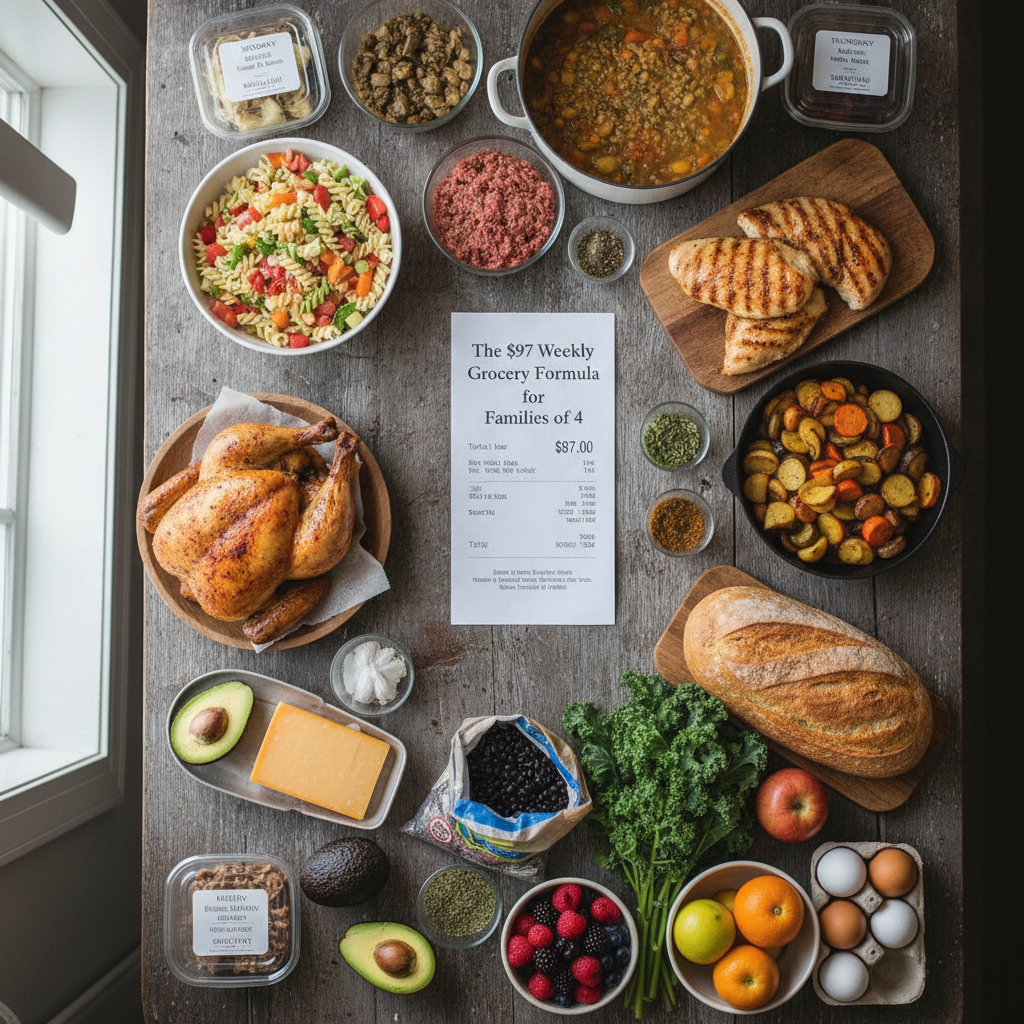
The $97 Weekly Grocery Formula for Families of 4
A repeatable weekly grocery formula, backed by a real $97 receipt, that feeds a family of four on under $100 without eating the same meals every week.
Jun 6, 2026
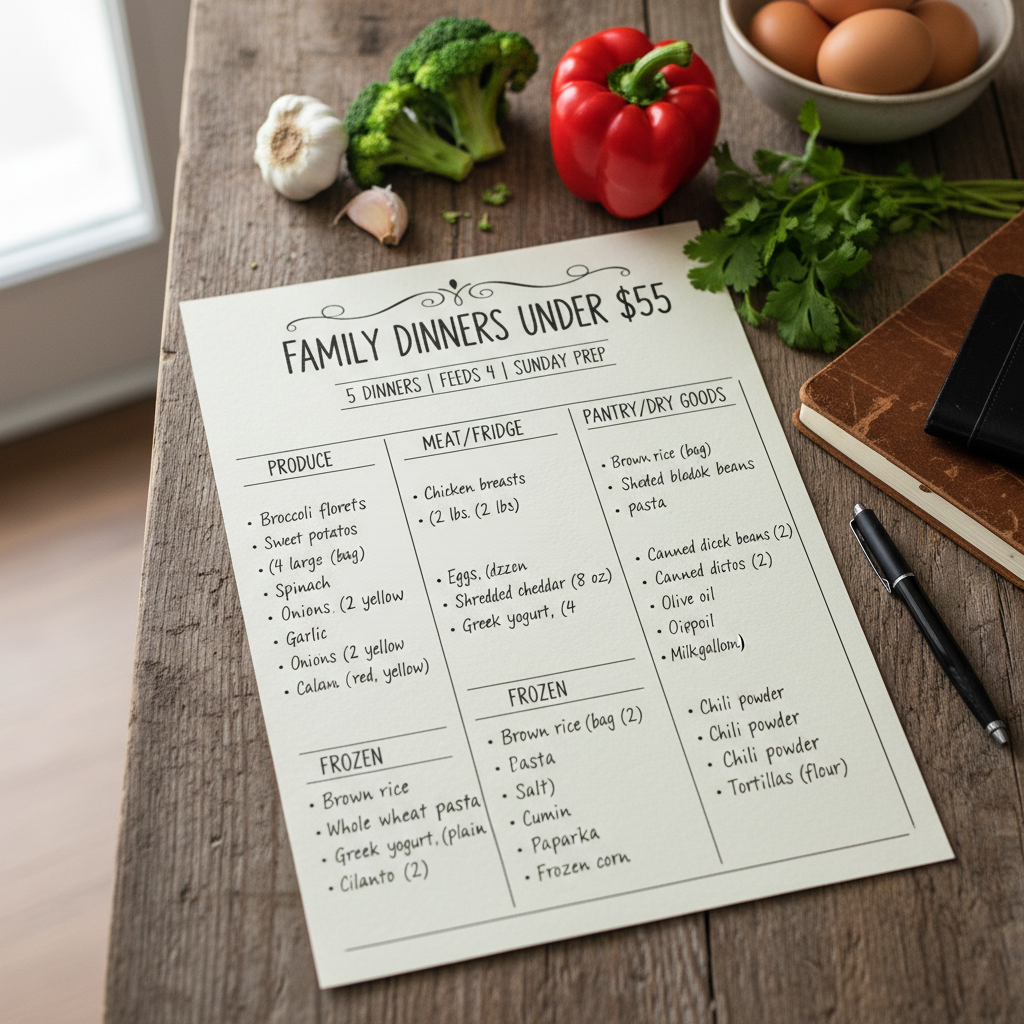
Meal Prep Grocery List Template for 5 Dinners Under $55
A ready-to-copy grocery list template, organized by store section, that cuts Sunday shopping time and keeps a family of 4 under $55 for 5 dinners.
Jun 5, 2026
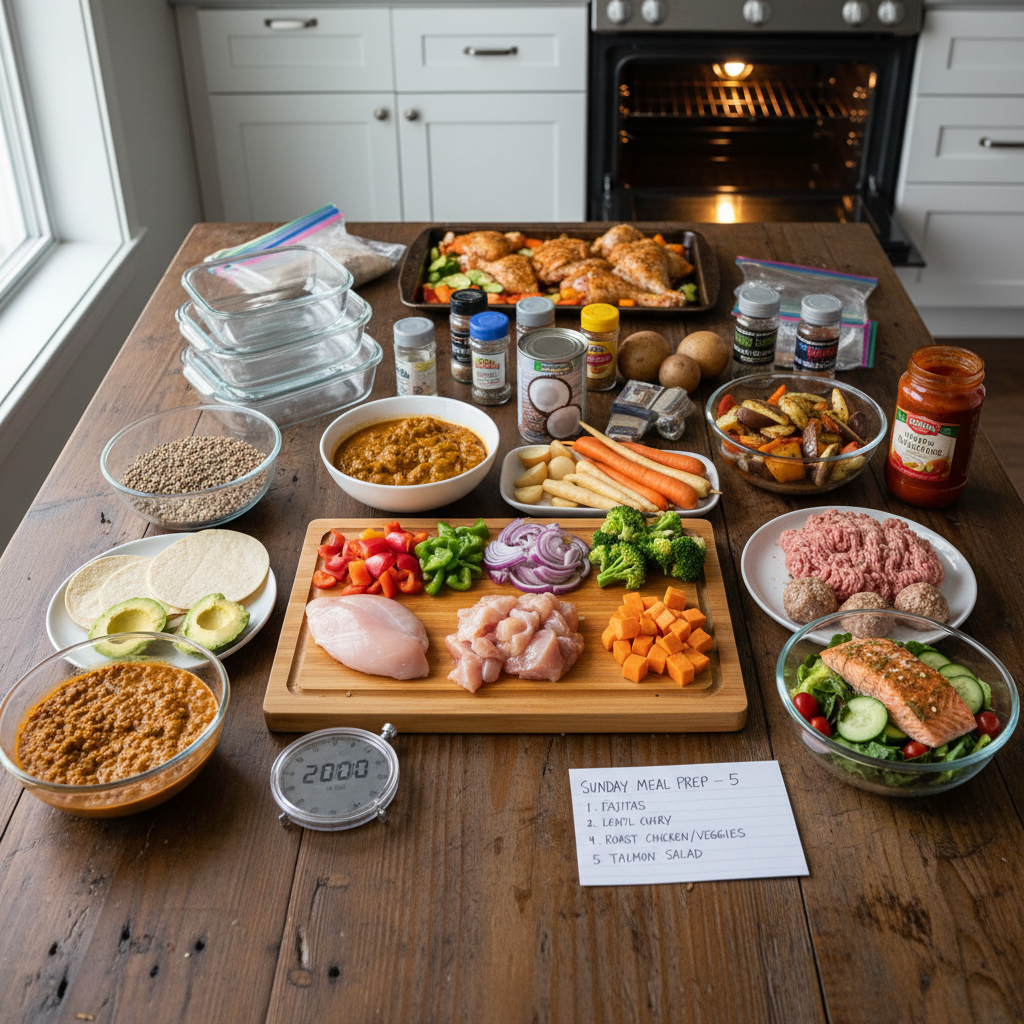
How to Meal Prep 5 Dinners in One Sunday Afternoon (2-Hour Routine)
Follow this timed two-hour Sunday routine — one oven, one burner, one cutting board — and walk away with five real weeknight dinners without a plan falling…
— Try ChefDeck free
Put this into practice this week.
Every new account starts with 14 days of Pro free — no card required.
Get started free